The Cheapest Way to Ship a Car (Without Getting Burned)
The cheapest way to ship a car is open transport, terminal-to-terminal, booked at least two weeks out with flexible pickup dates — a combination that can cut 20–40% off a convenience-first booking. The savings are real, but the floor has limits: never sacrifice verified carrier insurance, FMCSA authority, or a written contract to shave dollars. Here’s the full playbook.
Everyone wants the cheapest way to ship a car. The problem is that “cheapest” in auto transport has two meanings: the cheapest legitimate price, and the cheapest number on a quote — which is often a fiction that evaporates into a higher price later. This guide is about the first kind. Every tactic below is verified, legal, and used by experienced shippers — and each one comes with the honest limits of what it can save you.

The cheapest-possible formula
If you want the single cheapest legitimate shipment, it looks like this:
Open transport + terminal-to-terminal + booked 2+ weeks ahead + flexible pickup dates + off-season timing.
Each element removes cost from a different part of the carrier’s operation: open transport maximizes the carrier’s revenue per trip (so your share drops), terminals eliminate residential detours, advance booking lets carriers compete, flexibility lets you fill an empty slot, and off-season timing avoids demand surges. Stack all five and you’re looking at meaningfully lower pricing than a door-to-door, enclosed, last-minute, peak-season booking — often 20–40% less for the same route.
The rest of this article breaks down each tactic, what it saves, and what it costs you in convenience.
1. Ship open transport
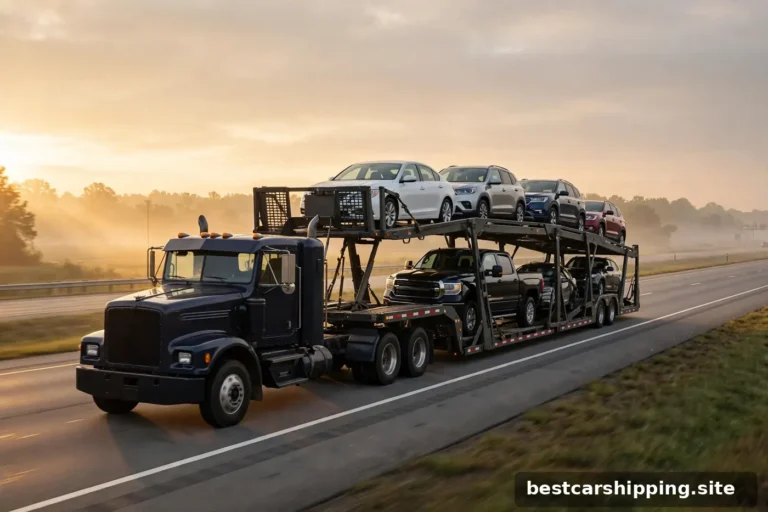
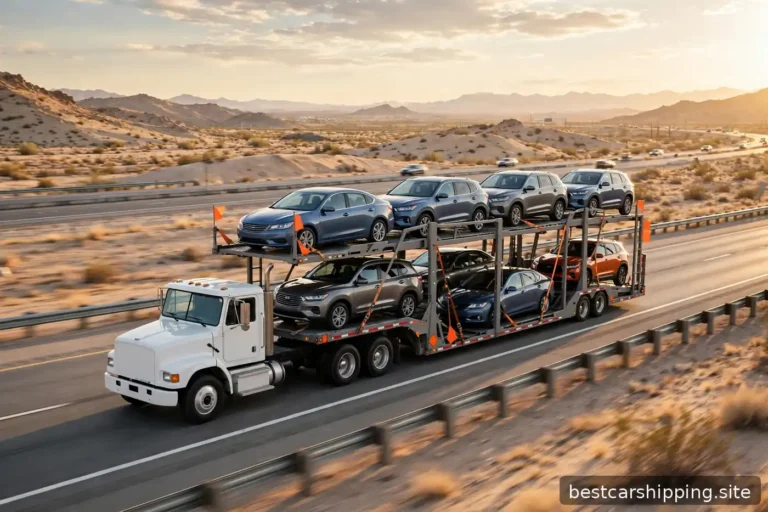
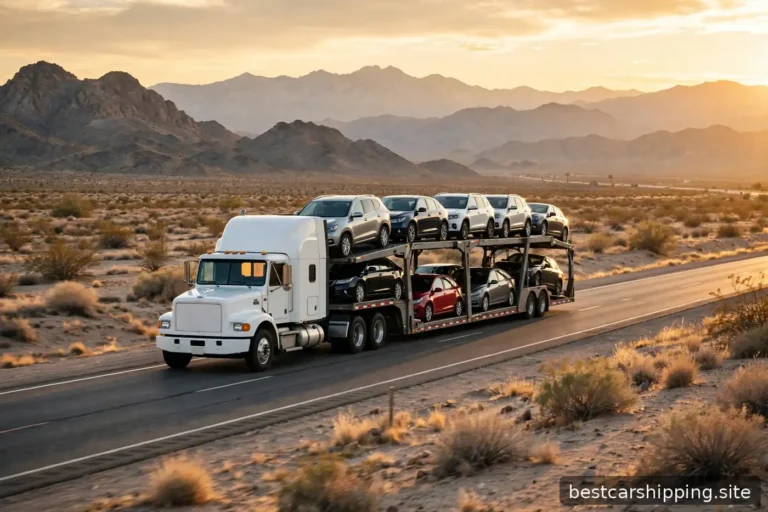
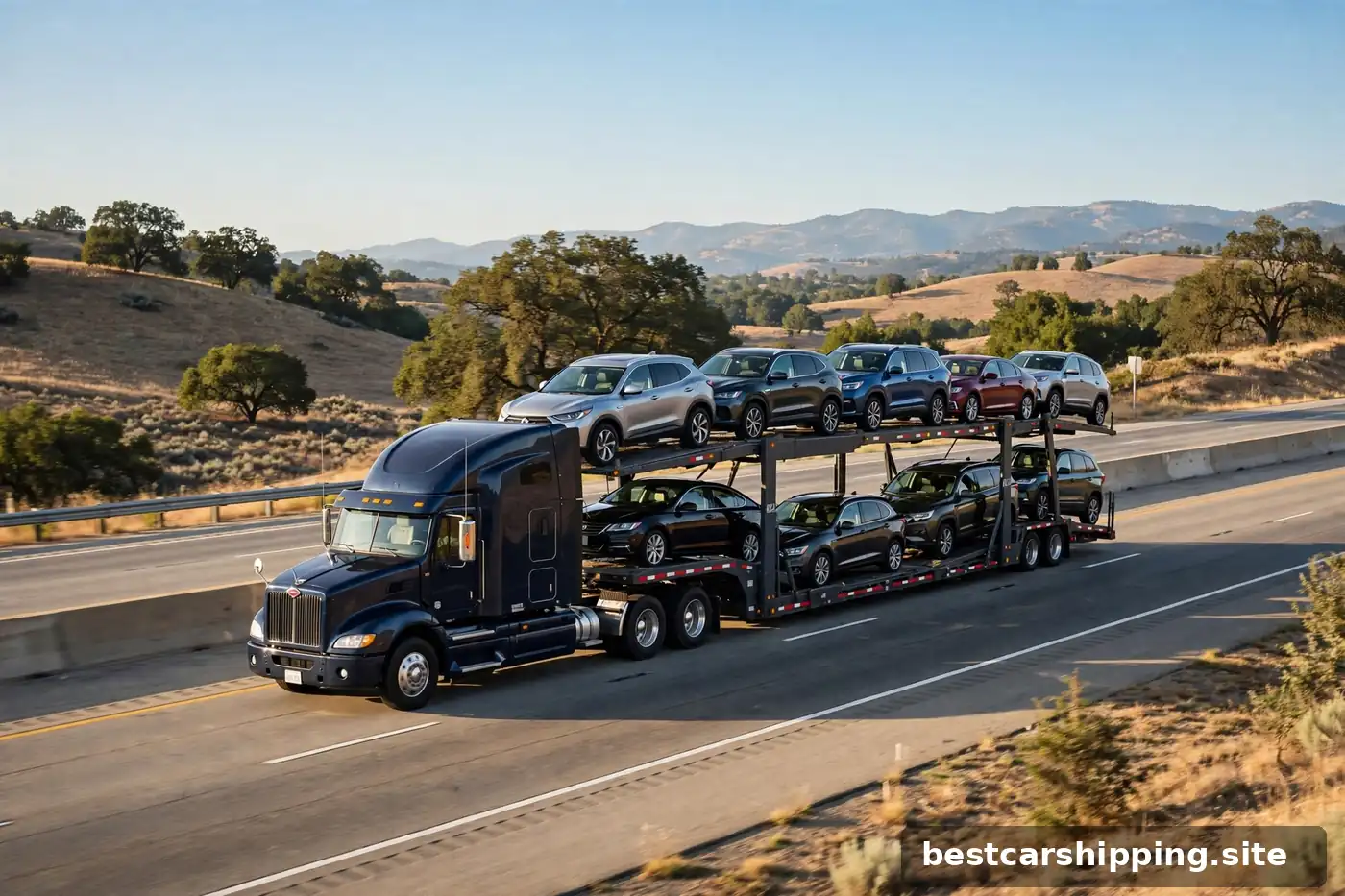
This is the single biggest lever. Open transport is the industry standard — the double-decker trailers you see delivering new cars to dealerships — and it costs 30–60% less than enclosed on the same route, per 2026 industry pricing data. Move.org’s research found savings of over $400 from choosing open over enclosed.
Why it’s cheaper: an open carrier holds up to ten vehicles; an enclosed trailer holds two to six. The carrier’s trip costs roughly the same either way, so each car on the open trailer pays a smaller share. Open carriers are also far more numerous, which means more competition for your load.
When it’s fine: daily drivers, cars under ~$50,000, anything with existing wear, lease returns, cars you’re selling. If it’s good enough for a brand-new car leaving the factory, it’s good enough for yours. Our open vs enclosed comparison has the full breakdown, and our enclosed-worth-it framework helps you decide honestly.
2. Use terminal-to-terminal
Door-to-door service is convenient — the driver comes as close to your addresses as legally possible — but every residential detour costs the driver time and fuel. Terminal-to-terminal shipping means you drop your car at a transport hub near a major metro area and pick it up at the destination terminal. The carrier loads from a location designed for trucks, with no cul-de-sac navigation.
Savings are meaningful but variable. The tradeoff is your time and the cost of getting to and from the terminals. Terminal shipping makes the most sense when you live near a major metro area with an established terminal; if the nearest terminal is two hours away, the savings evaporate into your own driving time and fuel. Our door-to-door vs terminal guide covers the tradeoff in detail.
One caution: ask about terminal storage fees and operating hours. A “cheap” terminal option that charges daily storage after 24 hours can surprise you if your pickup is delayed.
Key takeaways
- Open transport is the biggest single saver: 30–60% less than enclosed.
- Terminal-to-terminal removes residential detour costs — best near major metros.
- Check terminal storage fees and hours before committing.
3. Book at least two weeks ahead
This is the most underused tactic. When a broker posts your load with two or more weeks of lead time, multiple carriers can bid on it — and as Move.org explains, each new bid tends to come in lower than the last. The benefits of early booking max out at about two weeks; you don’t need months.
Last-minute bookings invert this: with days to go, you’re paying for a carrier to rearrange their schedule or deadhead to reach you. Expedited and rush fees are among the steepest surcharges in the industry. If your move date is fixed, book the car shipment the moment the date is known — it’s one of the few parts of a move you can lock in early at no cost.
4. Stay flexible on dates
Carriers price for efficiency. A driver with an empty slot passing through your city on Wednesday would love your car — but if you insist on Friday pickup, that driver is gone and you’re paying for someone to come specifically for you. Flexible pickup windows (a 3–5 day range instead of a fixed date) let the broker match you with a carrier already running your corridor.
This is also why “guaranteed pickup dates” cost extra: the guarantee means the broker must secure capacity regardless of efficiency, and you pay for that certainty. If your schedule allows it, trade the guarantee for the window and pocket the difference.
Practical version: give the broker your ideal date plus a range (“anytime that week works”) — wider windows get better prices.
5. Ship in the off-season
Auto transport is seasonal. Summer is peak season — relocations, college moves, and dealership activity push demand and prices up. Snowbird season (fall southbound, spring northbound on FL/AZ corridors) spikes those specific routes. Winter, outside the snowbird lanes, is generally the softest demand period, and spring and fall offer balanced pricing on most routes.
If your timing is flexible, avoid June through August for the lowest prices. If you’re shipping on a snowbird corridor, book the shoulder periods. Our fall 2026 market update (car shipping costs this fall) covers current seasonal dynamics.
Realistic expectation: seasonal timing moves quotes 10–20% on affected routes — it stacks with the other tactics.
6. Get 3–5 quotes and read the middle
More quotes mean more competition — but the point isn’t to take the lowest number. Legitimate quotes for the same route, vehicle, and dates cluster together; the honest price is usually in the middle of the pack. As Move.org advises, avoid both the lowest and highest quotes: the lowest is often bait for a later price increase, and the highest is just expensive.
What to compare across quotes: total price (not just the deposit), what’s included, the pickup window, the carrier assignment policy, and the cancellation terms. A quote that’s $150 higher but includes a real pickup window and a no-fee cancellation policy can be the cheaper option in practice. Our quote comparison guide walks through the ten questions that separate real quotes from marketing.
Key takeaways
- Book 2+ weeks ahead: more carriers bid, prices drop. Benefits max out around two weeks.
- Flexible pickup windows beat guaranteed dates on price.
- Off-season timing (avoid summer peak) can move quotes 10–20%.
- Get 3–5 quotes; the honest price is usually in the middle.

7. Trim the vehicle and the route
Small trims, real savings:
- Remove roof racks, cargo boxes, and bike racks. They add height and length that can push you into a higher size band. Our SUV/truck cost guide details how size surcharges work.
- Quarter tank of fuel. A full tank is dead weight — on a large truck, a full 30-gallon tank adds ~180 lbs. Carriers price weight.
- Meet near the interstate. If you’re rural, offering to meet the driver at a truck-accessible location near a highway can erase the $150–$300 rural access surcharge.
- Ship operable. An inoperable vehicle adds ~$150 for winch loading. If a dead battery is the only problem, a jump start pays for itself many times over. (See our inoperable shipping guide.)
- One vehicle, one shipment. It sounds obvious, but consolidating — shipping when you can fill the broker’s efficiency — beats splitting across dates.
Putting it together: the math
Take a 1,200-mile sedan shipment as an example. Baseline open transport door-to-door, booked a week out, fixed date, summer: roughly $900–$1,200 (2026 averages via CitizenShipper).
Apply the playbook: open transport (already assumed), terminal-to-terminal (saves the residential premium), booked three weeks ahead with a 5-day pickup window, shipped in October instead of July. Realistic outcome: the lower half of the range or below it — $800–$950 instead of $1,000–$1,200. That’s not a trick; it’s just what the shipment actually costs when the carrier can run it efficiently.
The reverse — enclosed, door-to-door, booked 3 days out, guaranteed date, July — runs $1,800–$2,400 for the same car and route. Convenience is priced; buy it deliberately.
What never to sacrifice
The floor of legitimate pricing exists for a reason. Never trade these for a lower number:
- FMCSA authority. No MC number, no booking. Unlicensed operators are where deposits go to die. (How to verify.)
- Verifiable carrier cargo insurance. The cheapest quote in the world is expensive if your car arrives damaged and there’s no policy to claim against. (Insurance guide.)
- A written contract with a firm total. “Estimated” totals and verbal promises are how bait-and-switch works.
- The Bill of Lading inspection. Skipping the pickup inspection to save time voids your damage claim before it starts. (BOL guide.)
- Payment by credit card. Anyone demanding wire transfers for a deposit is telling you who they are.
A quote that requires sacrificing any of these isn’t cheap — it’s a scam with a discount sticker.
Cheap-price traps to avoid
- The too-good quote. An outlier 30–50% below the cluster will “adjust” upward after you’ve paid the deposit. The honest price is in the middle.
- The large upfront deposit. Modest deposits are normal; large deposits before a carrier is assigned are leverage, not logistics.
- Skipping insurance verification to save time. Ten minutes of verification protects a five-figure asset.
- Choosing a broker on price alone. The broker’s fee is a small part of your total; carrier quality, communication, and honesty matter more than a $50 difference in broker fees.
Key takeaways
- The cheapest legitimate shipment: open + terminal + 2-week booking + flexible dates + off-season.
- Realistic savings vs. a convenience-first booking: 20–40% on the same route.
- Never sacrifice FMCSA authority, verified cargo insurance, a written contract, or the BOL inspection.
- The honest price is in the middle of 3–5 quotes — outliers are bait.
FAQ
What is the absolute cheapest way to ship a car?
Open transport, terminal-to-terminal, booked at least two weeks in advance with flexible pickup dates, shipped outside peak season. Each element cuts a different cost; stacked, they can reduce the price 20–40% versus a door-to-door enclosed last-minute booking.
How much can I save by choosing open over enclosed transport?
Enclosed costs 30–60% more than open on the same route — Move.org’s research found savings of over $400 on a typical shipment just from choosing open. For daily drivers, open is the standard for a reason.
Is terminal-to-terminal shipping worth the hassle?
It depends on your location. Near a major metro with an established terminal, the savings are real and the hassle is a short drive. If the nearest terminal is hours away, your time and fuel eat the savings — get quotes both ways and compare.
How far in advance should I book car shipping?
At least two weeks. More carriers can bid on your load with more lead time, and the price benefits max out around the two-week mark. Last-minute bookings pay rush premiums.
Can I negotiate car shipping prices?
Somewhat. The broker’s margin has room, but the carrier’s price is set by the market — a broker can’t negotiate a carrier below what the lane pays. Your real negotiating power is flexibility: wider pickup windows and terminal options give the broker room to find cheaper capacity.
Why are some car shipping quotes so much cheaper than others?
Because some are fictional. Legitimate quotes for the same shipment cluster together; an outlier far below the pack is usually bait for a post-deposit price increase. Get 3–5 quotes and treat the middle of the pack as the honest price.
Sources: distance-tier pricing from CitizenShipper’s 2026 cost breakdown; booking tactics and quote advice from Move.org’s cheapest-way guide.