Is Enclosed Transport Worth the Extra Cost?
Enclosed transport is worth the 30–60% premium when your vehicle’s value or vulnerability justifies it: classics, exotics, luxury cars, and fresh restorations. For a daily driver worth under $50,000, open transport is statistically just as safe and the extra cost buys mostly peace of mind. The decision comes down to vehicle value, route exposure, and season — here’s the framework.
The enclosed-vs-open question is the car shipping industry’s favorite upsell. Open transport is the default, the cheapest, and what roughly 90%+ of vehicles ship on — including brand-new cars going from factory to dealership. Enclosed is the premium option, and its marketing leans hard on fear: road debris, hailstorms, prying eyes. Some of that fear is legitimate. Most of it, for most cars, isn’t worth paying for.
This isn’t an argument against enclosed transport. For the right vehicle, it’s clearly the right call. This is an argument against paying for it by default — and a framework for deciding based on your actual car, your actual route, and your actual risk tolerance.
What enclosed transport actually is
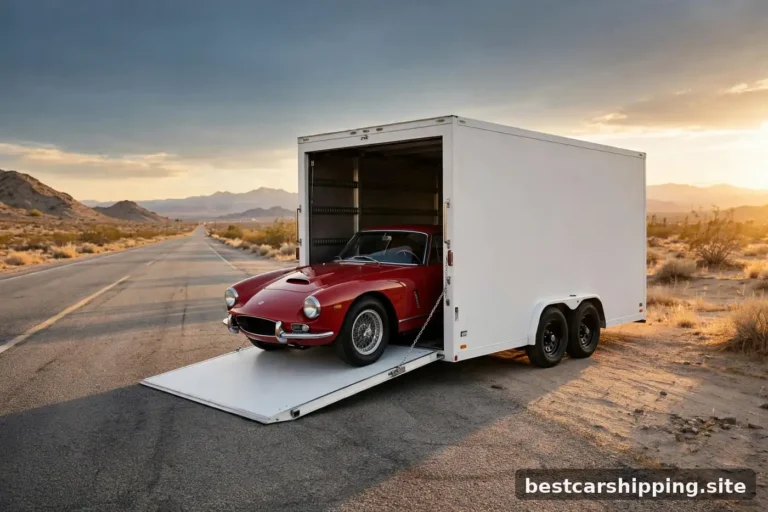
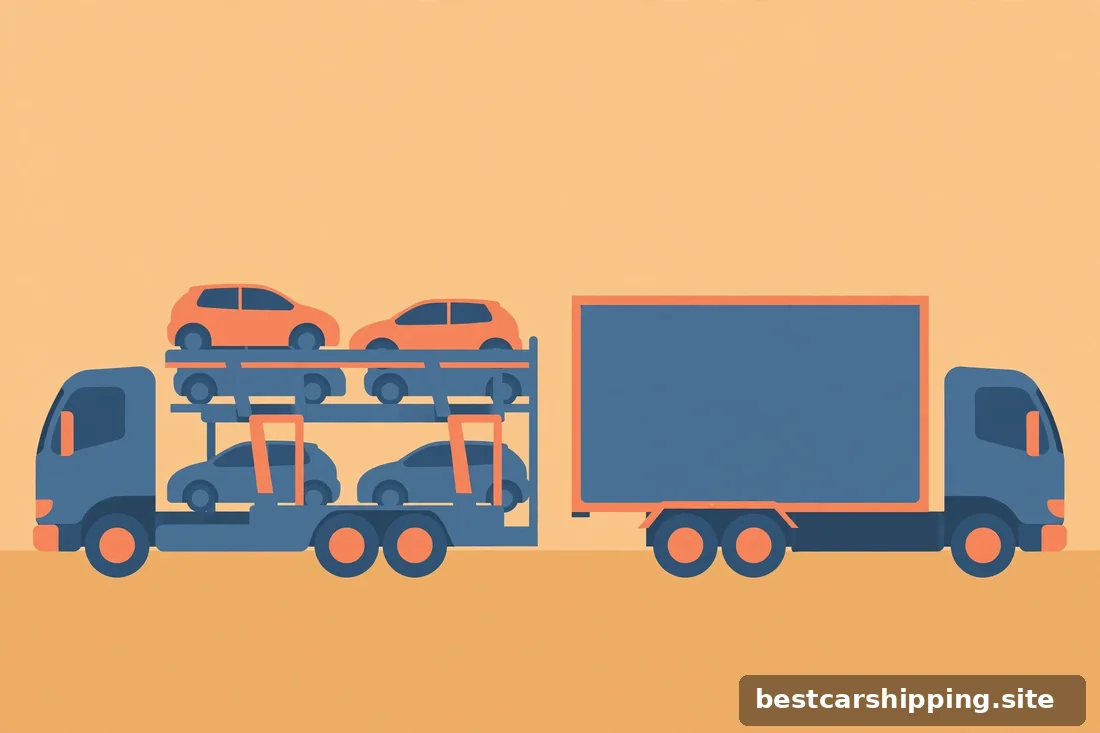
An enclosed trailer is a fully covered hauler — solid walls and roof, sometimes with a liftgate instead of ramps. Your car travels inside, shielded from weather, road debris, dust, and visibility. Enclosed trailers typically carry two to six vehicles (vs. up to ten on an open carrier), which is the main reason they cost more: fewer cars per trip means each car pays a bigger share of the trip’s cost.
There are two flavors worth knowing:
- Soft-sided enclosed (canvas sides): protection from weather and visibility, lighter and slightly cheaper. Less common.
- Hard-sided enclosed: full metal walls, maximum protection. What most people mean by “enclosed.”
Some enclosed carriers offer extras: liftgates for low-clearance vehicles, climate control, drip guards between decks, and higher cargo insurance limits (often $250,000 to $1 million+, vs. the ~$100,000 typical of open carriers). Those extras matter for high-value cars and are part of what the premium buys. If you’re still weighing the basic comparison, our open vs enclosed guide covers the side-by-side details.
The premium, in real dollars
Industry data consistently puts the enclosed premium at 30–60% over open transport on the same route — CitizenShipper’s 2026 pricing data confirms this range. In dollars:
| Distance | Open (sedan) | Enclosed (sedan) | Premium |
|---|---|---|---|
| Under 500 mi | $400–$700 | $700–$1,100 | +$300–$400 |
| 500–1,000 mi | $700–$1,000 | $1,100–$1,500 | +$400–$500 |
| 1,000–1,500 mi | $800–$1,200 | $1,300–$1,800 | +$500–$600 |
| 1,500–2,500 mi | $1,000–$1,500 | $1,600–$2,400 | +$600–$900 |
| 2,500+ mi | $1,100–$1,700 | $1,800–$3,000+ | +$700–$1,300+ |
So the question “is it worth it” is really “is $500–$1,300+ of extra protection worth it for this car on this route.” That’s a much more answerable question.
Key takeaways
- Enclosed costs 30–60% more than open — roughly $400–$1,300+ extra depending on distance.
- The premium reflects capacity (2–6 cars vs. up to 10), not just the walls.
- Frame the decision as: is this dollar amount worth it for this specific car and route?
When enclosed is worth it
Pay the premium when one or more of these apply:
- High vehicle value. The common rule of thumb: vehicles worth $70,000+ deserve enclosed. The math is straightforward — the premium is a small fraction of the vehicle’s value, and the higher cargo limits on enclosed carriers ($250K–$1M+) actually match the asset. Our classic car shipping guide covers agreed-value insurance and specialty handling for collector cars.
- Classic, exotic, or collector cars. Irreplaceable paint, original parts, concours condition — damage isn’t just a repair bill, it’s a loss of originality. Enclosed is the standard for this segment for good reason.
- Fresh paint or restoration. A car that just came out of the paint booth is uniquely vulnerable to chips and dust. Enclosed protects the investment.
- Low ground clearance. Exotics and sports cars that can’t handle standard ramps benefit from enclosed carriers with liftgates.
- High-theft-risk vehicles. Enclosed trailers hide what’s inside. A rare or high-profile car is less of a target when nobody can see it.
- Harsh route or season. Shipping through hail country in spring, desert dust storms, or winter road-salt regions increases the exposure that enclosed eliminates.
When open is perfectly fine
Skip the premium when:
- It’s a daily driver under ~$50,000. Open carriers move millions of ordinary cars safely every year — including brand-new vehicles from factories to dealerships. If it’s good enough for a new car with zero miles, it’s good enough for your Camry.
- The car already has wear. A daily driver with existing chips and dings isn’t going to suffer meaningful additional harm from open transport. Paying $600 extra to protect a car with 80,000 miles of road wear on it is sentiment, not economics.
- You’re price-sensitive and the route is mild. A short, fair-weather, metro-to-metro route on open transport is the lowest-risk shipping scenario there is.
- It’s a lease return or a car you’re selling. The next owner isn’t paying you extra for enclosed shipping. Don’t spend the premium on someone else’s car.
The fear-based pitch — “do you really want your car exposed to the elements?” — deserves a straight answer: your car is exposed to the elements every day it sits in your driveway. Open transport adds highway miles of exposure, not a different category of risk.
The decision framework
Run your situation through these four questions in order:
- What’s the vehicle worth? Over ~$70K: lean enclosed. $50–70K: judgment call. Under $50K: open, unless another factor says otherwise.
- Is it irreplaceable or freshly restored? Collector, exotic, concours, fresh paint, or sentimental one-of-one — enclosed regardless of book value. A $25,000 classic with original paint is a better enclosed candidate than a $55,000 three-year-old luxury sedan.
- What’s the route and season? Cross-country through hail season, desert summer, or winter salt states adds exposure. Short, mild routes subtract it.
- What does the premium buy in peace of mind? Be honest about this one. If you’ll spend the entire transit week anxious about an open trailer, the premium might be worth it for your sleep. Just recognize it as a comfort purchase, not a risk calculation.
If questions 1–3 all point to open and only question 4 points to enclosed, you’re buying peace of mind. That’s a legitimate purchase — just make it with open eyes.
Key takeaways
- Value >$70K, irreplaceable condition, harsh route/season: enclosed earns its premium.
- Daily driver <$50K on a normal route: open is the rational choice.
- Peace of mind is a valid reason — just recognize it as comfort, not risk math.
What the premium actually buys
Beyond the walls, the enclosed premium typically includes:
- Higher cargo insurance limits. Enclosed specialists commonly carry $250,000 to $1 million+ in cargo coverage, vs. ~$100,000 typical for open carriers. For high-value cars, this alone can justify the premium. (Verify the actual certificate — see our insurance guide.)
- More experienced handling. Enclosed drivers tend to specialize in high-value vehicles: soft straps instead of chains, more careful loading, liftgates for low cars.
- Fewer vehicles, more attention. Two to six cars per trailer means your car gets more of the driver’s attention at loading and inspection.
- Discretion. Nobody on the highway knows what’s inside the trailer.
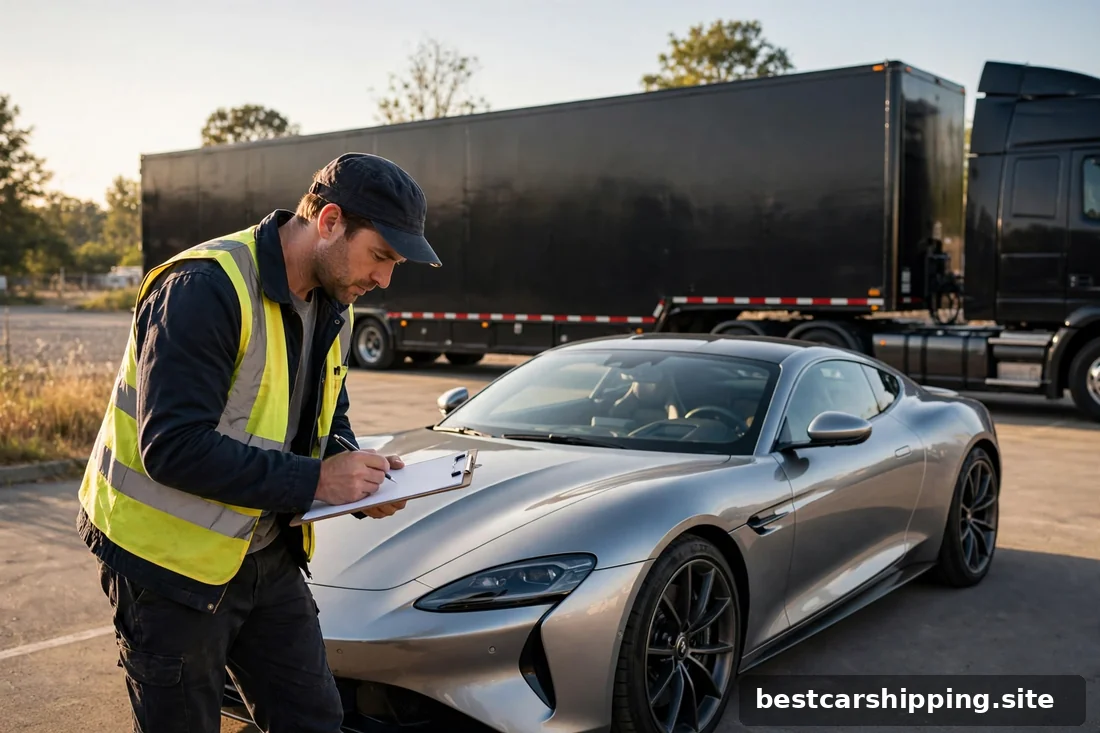
What it does not buy: immunity from damage. Cars can still be damaged in enclosed trailers — strap rub, loading scrapes, and accidents happen inside walls too. The Bill of Lading inspection matters exactly as much with enclosed. Our Bill of Lading guide covers the pickup and delivery inspection process.
Myths worth retiring
- “Open transport damages cars.” Open carriers deliver the overwhelming majority of shipped vehicles — including new cars — without incident. Damage happens, but it’s the exception, and enclosed doesn’t reduce it to zero.
- “Enclosed is always safer.” It’s safer against weather and debris specifically. Against loading damage, strap damage, or accidents, the difference is smaller than the marketing suggests.
- “You need enclosed for any car you care about.” You care about your daily driver too. Caring isn’t the criterion — value, irreplaceability, and exposure are.
- “Enclosed means white-glove service.” Some enclosed carriers are excellent; some are ordinary carriers with walls. Vet the carrier the same way regardless of trailer type.
Booking enclosed: practical notes
- Book earlier. The enclosed carrier pool is much smaller than open. Two to three weeks of lead time is wise; more for peak season.
- Expect fewer quotes. Less competition means less price shopping. Get three quotes if you can, but don’t expect ten.
- Confirm the equipment. “Enclosed” covers a range — ask whether it’s hard-sided, whether there’s a liftgate (for low cars), and what the cargo insurance limit is.
- Verify insurance for the value. This is where enclosed’s higher limits matter — but only if you confirm them. Ask for the certificate and check the cargo line. Our insurance verification checklist walks through it.
- The premium is negotiable within reason. Enclosed pricing has less flex than open, but flexible dates still help — a carrier filling the last slot on a trailer will deal.
FAQ
How much more does enclosed transport cost?
Typically 30–60% more than open transport on the same route. For a cross-country sedan move, that’s roughly $700–$1,300+ extra. The gap comes from lower trailer capacity (2–6 cars vs. up to 10), not just the walls.
Is enclosed transport safer than open?
Against weather, road debris, and dust — yes, clearly. Against loading damage or accidents, the advantage is smaller. For a standard daily driver, open transport’s safety record is excellent; enclosed’s main value is for high-value, irreplaceable, or freshly restored vehicles.
Do I need enclosed transport for a luxury car?
Depends on the car’s value and your risk tolerance. A $45,000 three-year-old luxury sedan ships fine on open transport. A $120,000 exotic or a collector car with original paint belongs in an enclosed trailer with high cargo limits.
Will enclosed transport protect my car from hail?
Yes — that’s one of enclosed’s clearest advantages. If you’re shipping through hail-prone regions in spring or storm season, enclosed eliminates the single most common weather risk to vehicles in transit.
Is enclosed transport worth it for a short move?
Rarely, unless the car is high-value or irreplaceable. The premium on a short route ($300–$400) buys less exposure time to protect against. For ordinary cars on short, fair-weather routes, open transport is the sensible default.
Can I get enclosed transport for an inoperable car?
Sometimes, but confirm winch capability explicitly — some enclosed specialists don’t handle non-running vehicles. Our inoperable car shipping guide covers the equipment and disclosure requirements.
Sources: enclosed premium and distance pricing from CitizenShipper’s 2026 cost breakdown.