Door-to-Door vs Terminal-to-Terminal Car Shipping
# Door-to-Door vs Terminal-to-Terminal Car Shipping
Here’s the 30-second version: door-to-door means the carrier picks up and delivers as close to your addresses as a big truck can legally and safely get — and it’s what most people should choose. Terminal-to-terminal means you drop off and collect your car at a shipping hub, which can save a little money if the terminals are convenient. Neither is a trick; they’re just different trade-offs.
Key takeaways
- “Door-to-door” means the nearest safe truck access — not literally your driveway if a 75-foot rig can’t fit.
- Terminal-to-terminal can save money, but only if terminals are near both ends; factor in your own driving and storage fees.
- Door-to-door is the default for a reason: simpler, faster, and usually worth the small premium.
- Always confirm the exact pickup/delivery arrangement in writing before the truck rolls.
What “door-to-door” really means
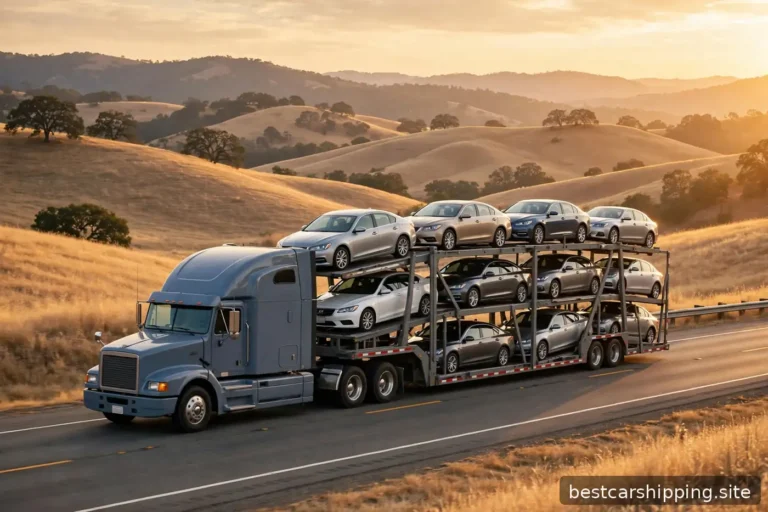
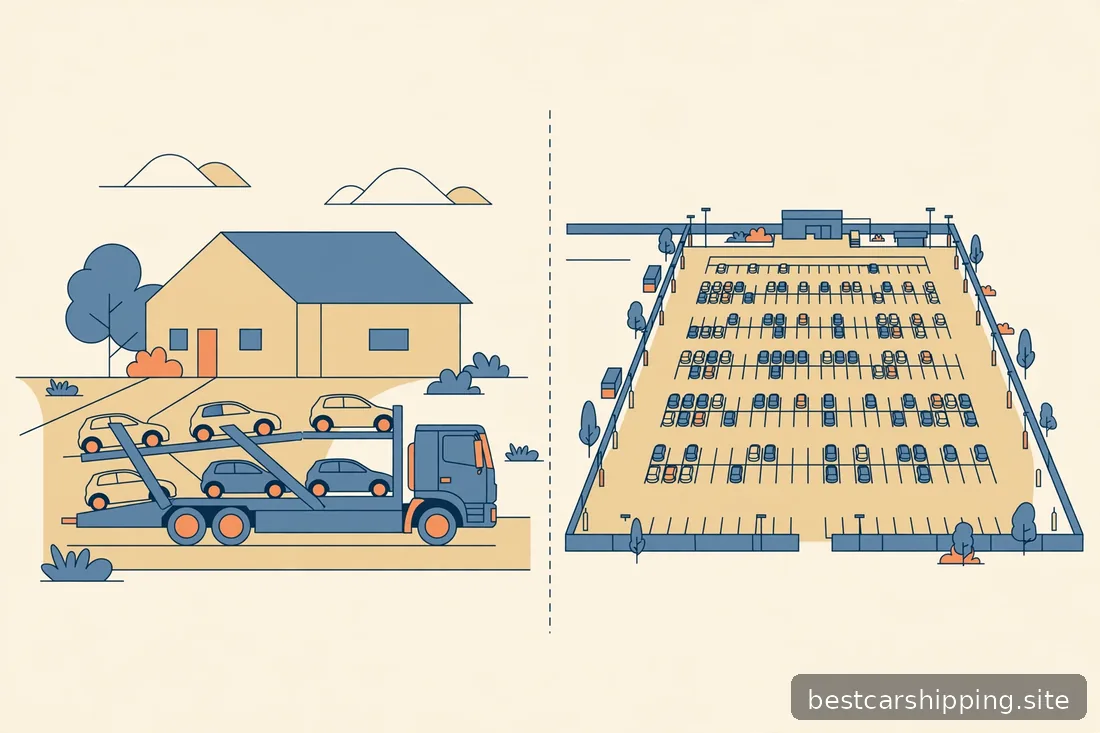
The name overpromises slightly, so let’s be precise. A car carrier is a 70–80-foot combination vehicle. It cannot navigate every residential street, low bridge, gated community, or apartment complex. So in practice, “door-to-door” means:
The driver picks up and delivers your car as close to your specified addresses as is legally and safely possible for the truck.
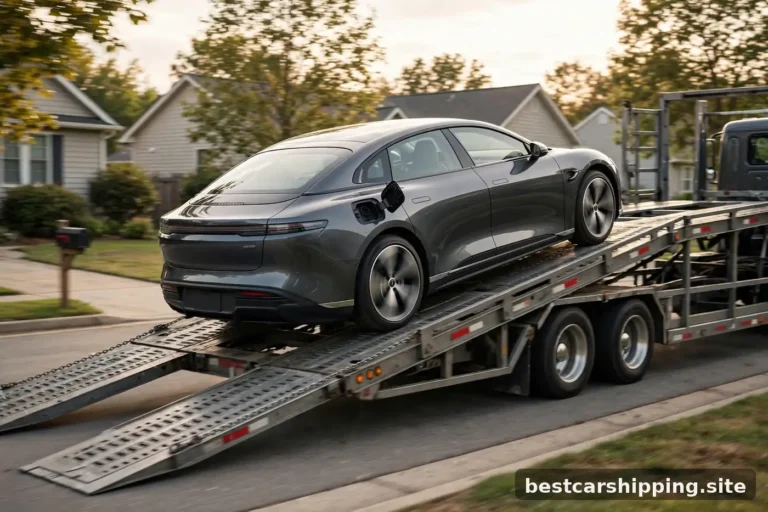
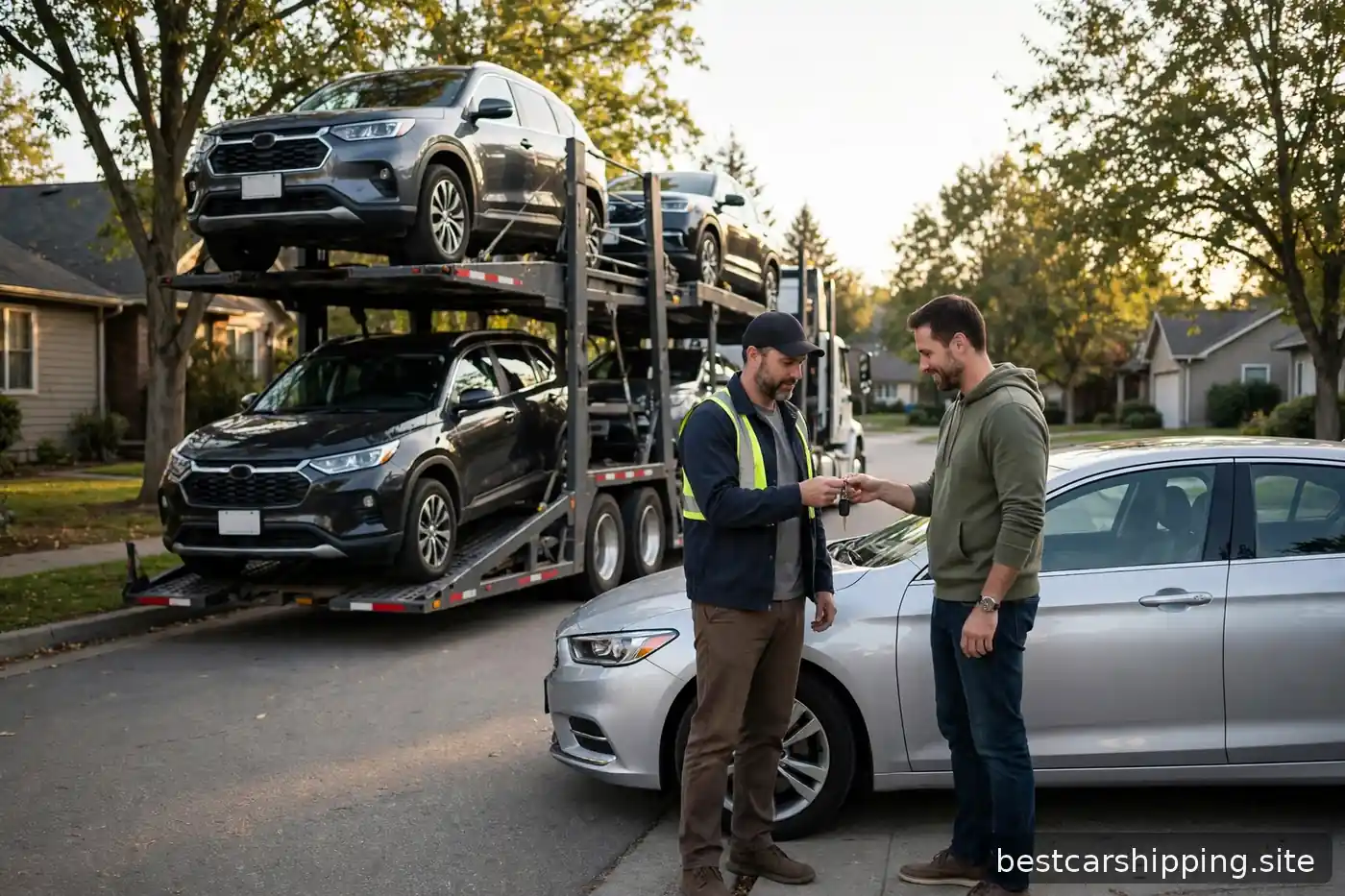
In most suburban and urban cases, that’s your driveway, your street, or the apartment parking lot. In trickier cases, the driver will call you before arrival and agree on a nearby meeting point — a big-box store parking lot, a wide street nearby, a gas station with truck access. This is normal, routine, and not a downgrade of the service.
What door-to-door does not mean:
- The truck will attempt your exact address no matter what. It won’t — and you shouldn’t want it to. A carrier wedged into a cul-de-sac is nobody’s idea of a good day.
- You’ll get an exact appointment time. You get a pickup window (typically 1–5 days to dispatch, then a day-of call with an estimated arrival). Our timeline guide explains why windows beat appointments in this industry.
- There’s no coordination needed. Keep your phone on. The driver’s day-of call is the linchpin of the whole delivery.
Door-to-door is the default quote you’ll receive from almost every broker. If a quote doesn’t specify otherwise, assume door-to-door.
What terminal-to-terminal really means
With terminal-to-terminal service, you drive your car to the carrier’s (or broker’s partner’s) storage facility — the terminal — at the origin city, hand over the keys, and the car waits there until a truck heading your direction picks it up. At the destination, the car is dropped at the terminal there, and you collect it.
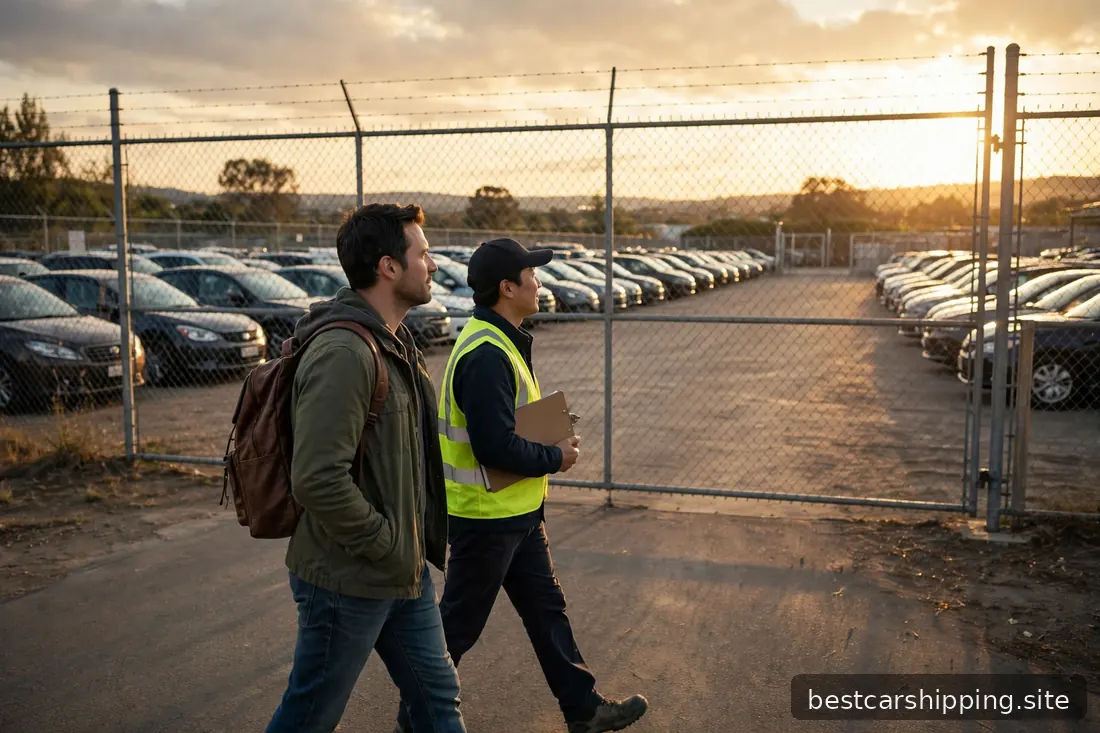
Terminals are typically fenced lots near major transport hubs and metro areas. Your car may sit for days waiting for the right truck, and again at the destination until you pick it up. That waiting is the core trade-off: you’re trading your time and convenience for a lower price.
A few realities people miss:
- Terminals aren’t everywhere. They’re concentrated around major metros and freight corridors. If you live in a rural area, the nearest terminal might be a two-hour drive — which can erase the savings and then some.
- Storage isn’t always free. Many terminals include a few days of storage, then charge daily fees. Ask about the free-storage window and the daily rate before you commit.
- Your car sits in a lot. It’s a secured lot, but it’s still days of sitting outdoors among dozens of other waiting vehicles.
- You do two extra trips. Drive to the origin terminal, get yourself home. Get yourself to the destination terminal, drive home. Factor in fuel, time, and possibly a ride.
CitizenShipper’s 2026 cost guide notes terminal-to-terminal as one of the standard ways to reduce a car shipping bill — and it is, provided the logistics work in your favor.
Cost comparison
Honest numbers are hard here because terminal pricing varies by operator, but the shape of the trade-off is consistent:
| Door-to-door | Terminal-to-terminal | |
|---|---|---|
| Service premium | Baseline (included in standard quotes) | Usually modestly cheaper |
| Typical savings | — | Varies; meaningful only if terminals are close |
| Your extra costs | None | Fuel + time for 2 terminal trips; possible storage fees |
| Your extra time | A day-of phone call and 30 minutes at each end | Two round trips to terminals; possible waiting days |
The savings come from the carrier’s side: no residential detours, no coordinating with individual customers, no waiting on someone who’s stuck in traffic. A truck can sweep a terminal, load several cars at once, and roll. That efficiency is what you’re buying into — and it’s real.
But do the full math. If the terminal option saves you $100 and costs you two 90-minute round trips plus $15/day in storage because you can’t collect for three days, you’ve lost money and gained hassle. The savings only survive when terminals are genuinely convenient.
Door-to-door: pros and cons
Pros:
- Maximum convenience — the truck comes to you (or very near you).
- Faster overall — no waiting for terminal consolidation at either end.
- One inspection handoff at pickup, one at delivery, both with you present.
- No storage fees, no extra driving, no coordinating rides.
- Standard service — every broker offers it, every quote includes it.
Cons:
- Slightly more expensive than terminal service.
- Requires you (or a designated person) to be reachable and available in the pickup window.
- In dense urban areas or restricted streets, you’ll meet the truck nearby anyway — which blurs the line with terminal service.
Terminal-to-terminal: pros and cons
Pros:
- Lower price — the carrier’s efficiency gets passed through, at least partly.
- Flexible timing — drop off when the terminal is open rather than syncing with a truck’s window.
- Good if you’re not at the origin address during the shipping window (already moved, traveling).
- Terminals on major corridors can mean faster dispatch — your car is sitting where the trucks already are.
Cons:
- You drive to and from terminals at both ends.
- Your car waits in a lot — days of outdoor storage at each end is possible.
- Storage fees after the free window.
- Fewer terminals in rural areas; the nearest one may be far.
- Two more handoffs means two more chances for inspection paperwork to get sloppy — photograph everything.
Which should you choose?
Choose door-to-door if: you value convenience, your schedule is tight, the price difference is small, terminals aren’t near you, or this is your first time shipping a car. For most people, most shipments, this is the right answer — it’s the default for a reason.
Choose terminal-to-terminal if: terminals sit near both your origin and destination, you’re flexible on timing, the savings are meaningful after you count your own driving and any storage fees, or you can’t be present for a residential pickup anyway.
The hybrid almost nobody asks about: door-to-terminal or terminal-to-door. Some brokers will quote these if you ask — convenient at the end where it matters, cheaper at the end where a terminal is handy. Worth a question when you’re getting quotes.
One more consideration for the terminal-curious: ask whose terminal it is. Some brokers use established partner terminals; others use whatever lot is available. A fenced, staffed, established facility and a random gravel lot are not the same thing. Ask for the address, look it up, and ask about security and storage terms in writing.
Frequently asked questions
Will the truck really come to my house?
Usually, or very close to it. The driver will call ahead and work out the nearest safe spot if your street can’t take the rig. In our experience following this industry, most “door-to-door” pickups happen within a few blocks of the address — the dramatic exceptions are the ones people post about online.
How much can terminal-to-terminal actually save?
It varies by route and operator — sometimes modest, sometimes meaningful. Get both quotes for your specific shipment and do the full math including your driving time, fuel, and potential storage fees. If a company can’t or won’t quote both, that’s a data point about the company.
Is my car safe sitting at a terminal?
Reputable terminals are fenced and monitored, and carrier insurance covers the vehicle while in the carrier’s custody — but confirm the custody timeline in writing: when does the carrier’s responsibility start, at drop-off or at loading? Photograph the car thoroughly at drop-off regardless.
Can I use terminal service at only one end?
Often yes — ask for door-to-terminal or terminal-to-door pricing. Brokers can usually accommodate it, and it’s a sensible middle ground when only one end has a convenient terminal.
What documents do I need at the terminal?
The same as any shipment: photo ID, the keys, and whatever the broker specified (title or registration copy for some cases). You’ll still sign a Bill of Lading — or more precisely, a condition report — at drop-off. Never sign one with blank damage fields; our Bill of Lading guide explains why this document is your damage-claim lifeline.
What if there’s no terminal near me?
Then door-to-door is the practical answer — and that’s fine. Terminals cluster around major metro areas and interstate corridors; outside those zones, the drive to a terminal wipes out the savings. Some brokers can arrange a partner lot or truck-accessible meeting point as a middle ground, which captures part of the terminal savings without the full detour. Ask what’s available on your specific lane before assuming terminal service is off the table.
The unglamorous truth: for most shipments, door-to-door wins on total value once you count your own time. Terminal service is a legitimate money-saver in the right geography — just make sure the geography is actually right before you commit to the extra driving.