Shipping an Inoperable Car: What Changes
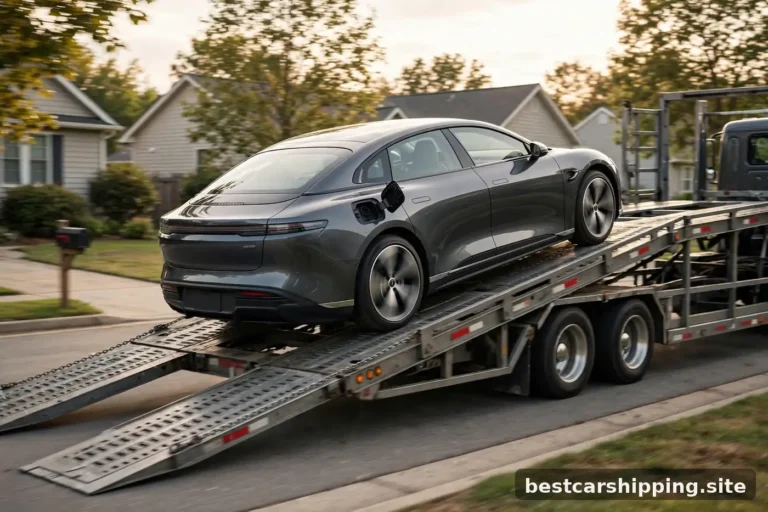
Shipping a car that doesn’t run costs about $150 more than a running vehicle on the same route. The carrier needs a winch to pull it onto the trailer, the vehicle must still roll, steer, and brake (or you need special equipment), and you must disclose the condition when booking. Here’s how inoperable shipping works from quote to delivery.
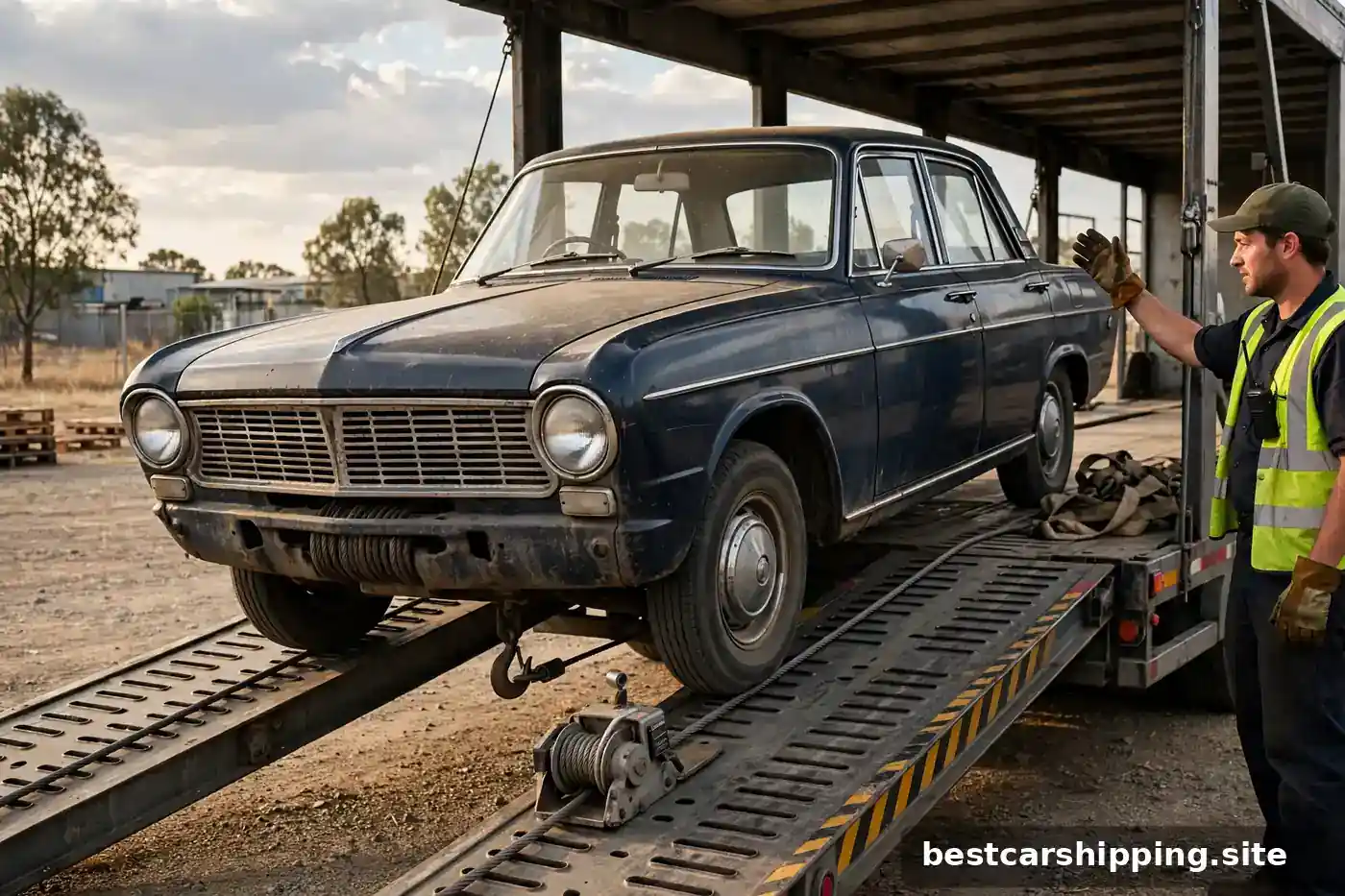
Project cars, auction wins, barn finds, flood-damaged vehicles, blown engines — plenty of cars that need shipping can’t drive onto the trailer under their own power. The industry handles this every day, and it’s not complicated, but it has rules that running vehicles don’t. The equipment is different, the price is different, and the disclosure requirements are strict. Get any of those wrong and you’ll discover the problem on pickup day, with a driver standing in your driveway and no way to load your car.
What “inoperable” actually means
In auto transport, “inoperable” has a narrower meaning than you might think. A car is inoperable for shipping purposes if it cannot be driven onto and off the carrier under its own power. That includes:
- Won’t start (dead battery, bad starter, seized engine)
- Starts but can’t move (transmission failure, broken axle, seized brakes)
- Can’t be driven safely (severe accident damage, missing wheels)
But here’s the critical distinction: most carriers divide inoperable vehicles into two groups:
- Rolls, steers, and brakes. The car doesn’t run, but it can be pushed or winched onto the trailer with someone steering and the brakes working. This is the standard “inoperable” case — a winch fee applies, and most carriers handle it routinely.
- Doesn’t roll, steer, or brake. Seized wheels, missing wheels, broken steering, no brakes. This needs a forklift or a carrier with specialized equipment, costs significantly more, and far fewer carriers can do it.
When a quote form asks “does it run?”, it’s really asking which of these two groups you’re in. A car that rolls but won’t start is a routine $150-ish surcharge. A car with locked-up wheels is a specialty job. Knowing your car’s exact condition — and describing it precisely — is what gets you an accurate quote instead of a pickup-day surprise.
How carriers load a non-running car
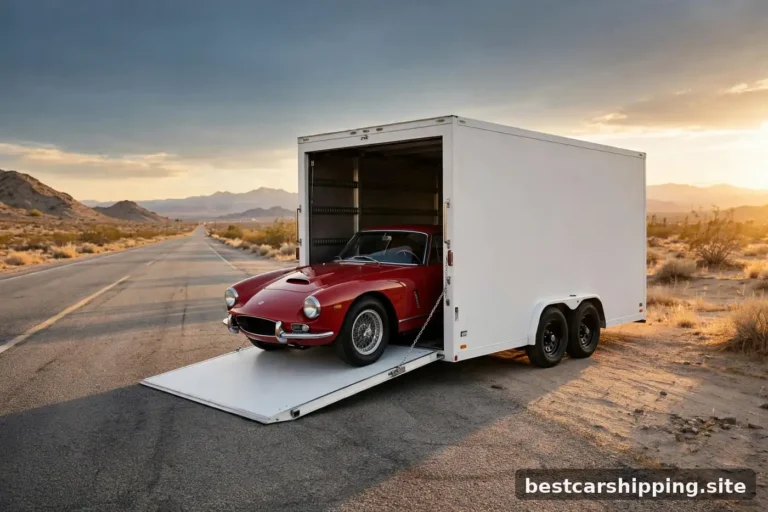
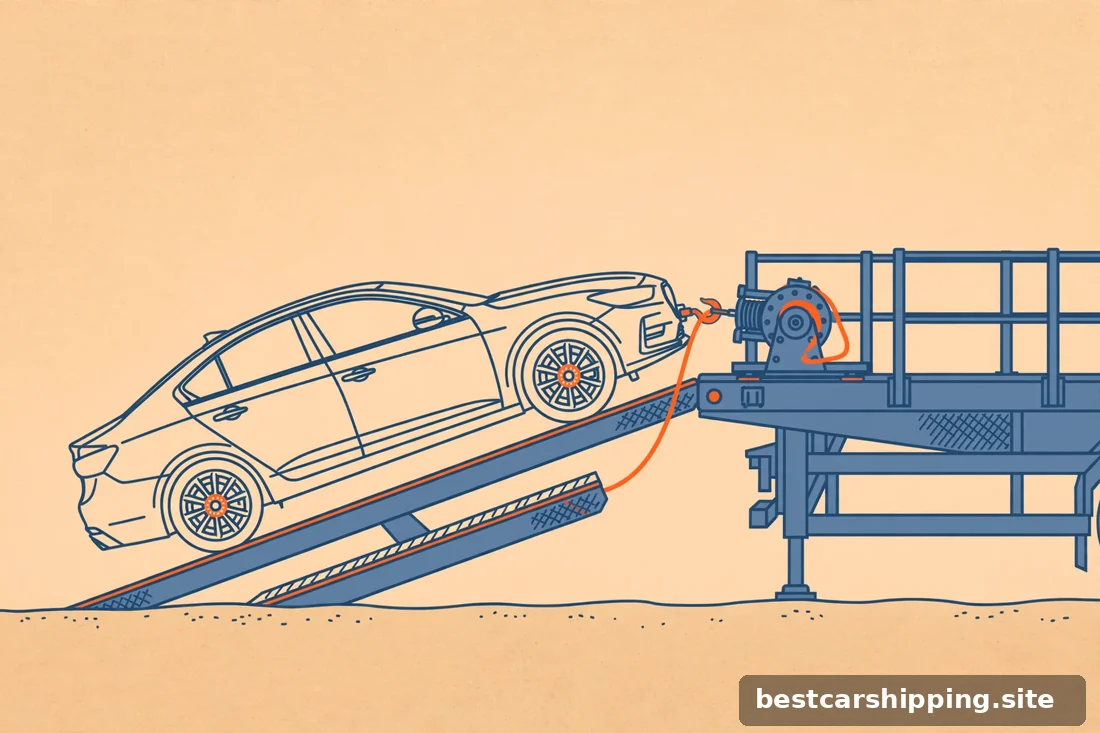
The standard tool is a winch: a cable mounted on the trailer that attaches to the vehicle’s frame or tow hooks and pulls the car up the ramp. The process looks like this:
- The driver positions the trailer and extends the ramps.
- The winch cable is attached to a solid tow point on the vehicle — never to the bumper, axle, or suspension components.
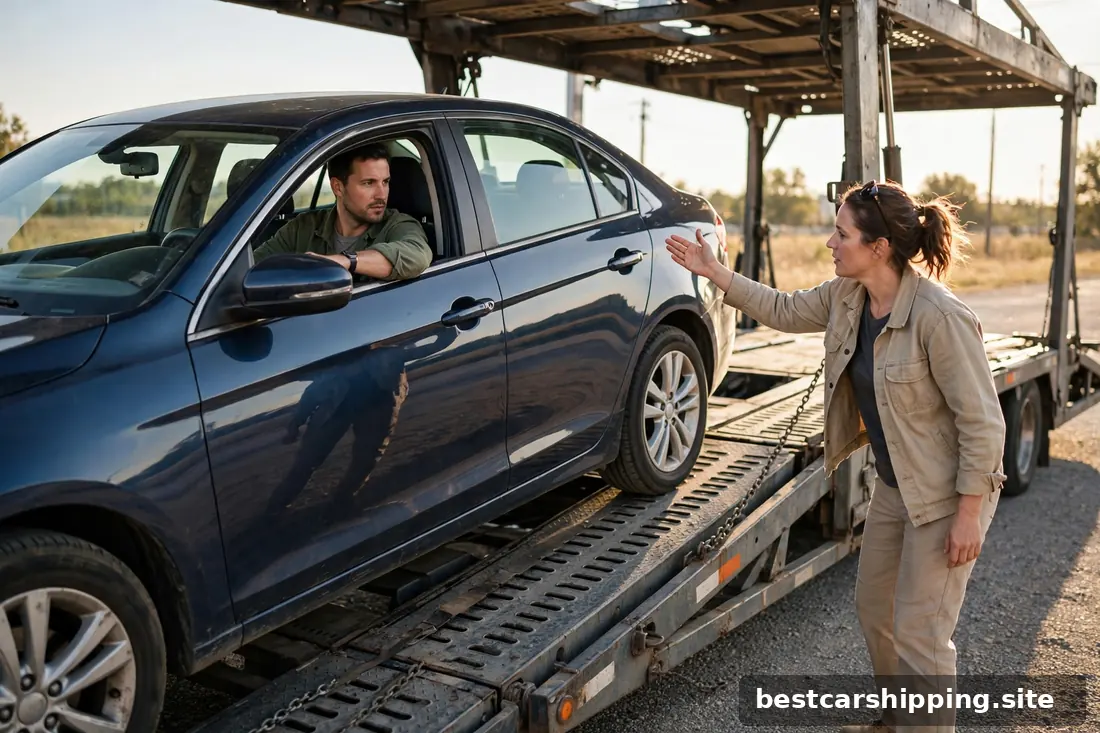
- Someone sits in the car to steer and operate the brakes while the winch pulls it up.
- Once positioned on the deck, the car is strapped down exactly like a running vehicle.
This is why rolling, steering, and braking matter: the car is moving without engine power, so it needs to be guided and stopped. A car that can’t be steered is genuinely dangerous to winch — it can swing off the ramp. That’s when the conversation moves to forklifts, and the price moves with it.
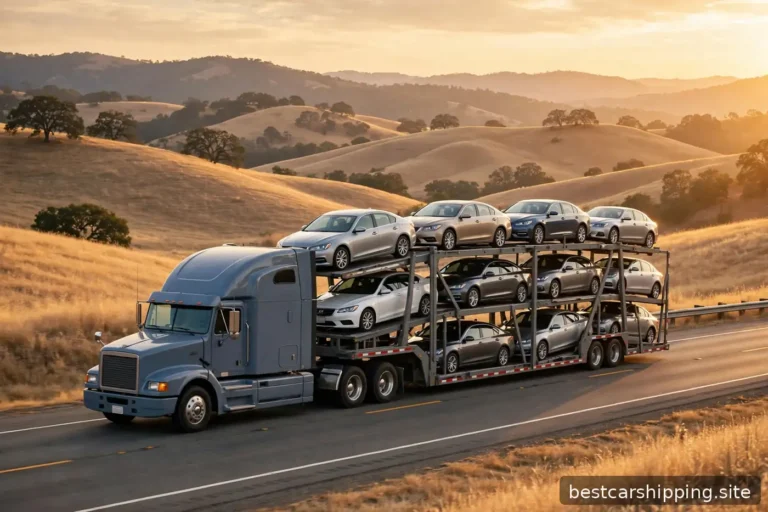
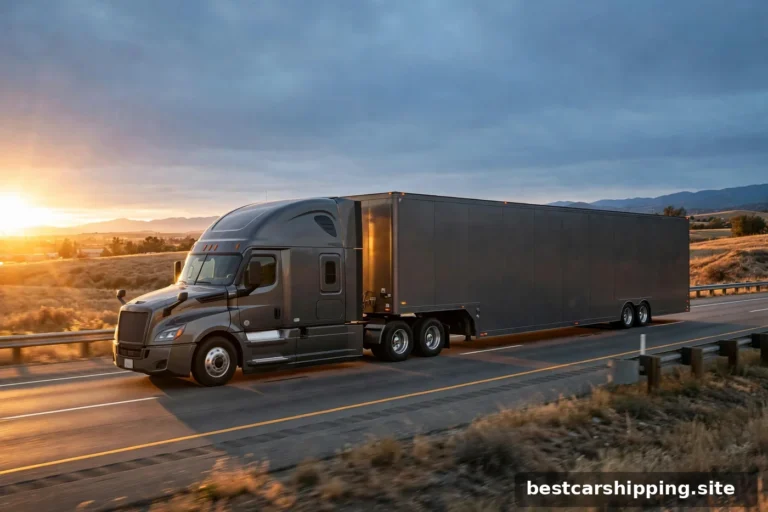
Most open carriers carry winches as standard equipment. Enclosed carriers often do too, though some enclosed specialists prefer not to handle inoperable vehicles at all. If you’re booking enclosed for a non-runner, confirm the winch capability explicitly.
Key takeaways
- Standard inoperable loading = winch pull, needs a car that rolls, steers, and brakes.
- Someone must be in the vehicle steering and braking during loading.
- No roll/steer/brake = forklift territory, far fewer carriers, much higher cost.
What it costs
The inoperable surcharge for a vehicle that rolls, steers, and brakes runs about $150 on top of the normal quote for the route — consistent with published industry pricing. That fee covers the winch, the extra loading time (winching takes longer than driving on), and the extra labor of guiding the car.
Add the surcharge to the standard distance tiers for open transport (2026 averages from CitizenShipper):
| Distance | Running sedan (open) | Inoperable (+~$150) |
|---|---|---|
| Under 500 mi | $400–$700 | $550–$850 |
| 500–1,000 mi | $700–$1,000 | $850–$1,150 |
| 1,000–1,500 mi | $800–$1,200 | $950–$1,350 |
| 1,500–2,500 mi | $1,000–$1,500 | $1,150–$1,650 |
| 2,500+ mi | $1,100–$1,700 | $1,250–$1,850 |
These ranges assume the vehicle rolls, steers, and brakes. If it doesn’t — forklift loading, missing wheels, seized drivetrain — expect the surcharge to be substantially higher and the carrier pool to be much smaller. Size surcharges stack on top: an inoperable full-size truck can carry both the ~$150 winch fee and a $100–$450 size surcharge. Our SUV and truck cost guide covers the size side of that equation.
Two more cost factors specific to non-runners:
- Fewer carriers compete for inoperable loads, especially on less-traveled routes. Less competition means less downward pressure on price.
- Expedited pickup is harder. A winch-equipped carrier has to be on your route at the right time; if you’re in a hurry, expect to pay for priority.
Disclosure: the rule you can’t skip
This is the most important section of this article. You must disclose that the vehicle is inoperable when you book. Not at pickup. When you book. Here’s why:
A carrier dispatched without a winch — or a driver who arrives expecting a running car — cannot load your vehicle. The pickup fails. You’re now paying for a missed pickup (many contracts charge for this), rebooking with the right equipment, and starting your timeline over. The $150 winch fee you were trying to avoid becomes a much larger bill and a delayed shipment.
Disclose precisely:
- It doesn’t start (vs. starts but won’t move vs. moves but can’t be driven — these are different)
- It rolls: yes or no
- It steers: yes or no
- Brakes work: yes or no
- All four wheels and tires present and holding air: yes or no
- Any missing parts, structural damage, or fluid leaks
Put it in the booking notes and confirm the carrier knows before dispatch. If a broker tells you “don’t worry, the driver will figure it out” — that’s a red flag, and it’s exactly the kind of bait-and-switch pattern covered in our car shipping scams guide.
Key takeaways
- Disclose inoperable status at booking, not at pickup — a winch-less truck can’t load your car.
- Describe the exact condition: rolls? steers? brakes? all wheels present?
- Failed pickups from undisclosed inoperability can trigger missed-pickup fees and rebooking costs.
When a winch isn’t enough
Some situations need equipment beyond a standard winch:
- Forklift loading. For vehicles that don’t roll — seized wheels, missing axles, cars sitting on blocks — a forklift lifts the vehicle onto the trailer. This requires a carrier with forklift access at both pickup and delivery, which is rare and expensive. Expect to pay several hundred dollars over standard rates, and plan for longer booking lead times.
- Wrecked vehicles. Accident-damaged cars with crushed frames, deployed airbags, and fluid leaks ship regularly (insurance auctions move thousands), but they need carriers experienced with wrecks. Fluid leaks must be contained — carriers won’t load a car dripping fluids onto vehicles below it.
- Stripped shells. A body shell with no drivetrain, no wheels, or no interior needs a flatbed or specialized trailer, not a standard auto carrier. This is a different market with different pricing.
- Flood-damaged vehicles. Beyond not running, flood cars have electrical and contamination issues. Disclose flood damage specifically — some carriers decline them, and insurance claims on flood-damaged vehicles are complicated by the pre-existing condition.
If your vehicle is in this territory, book with companies that explicitly advertise inoperable and specialty handling, get everything in writing, and plan for a longer timeline. The standard two-week booking window may not be enough — start earlier.
Prepping an inoperable vehicle
Preparation matters more for non-runners because the loading process is less forgiving:
- Charge or replace the battery if possible. Even a car that “doesn’t run” is easier to winch if the electrical system works — hazard lights, brake lights, and power steering (if the engine turns over) all help. If the battery is simply dead, a jump or replacement might move you from “inoperable” to “running” and save the fee entirely.
- Inflate the tires. Flat tires don’t roll well. A $5 air fill-up can be the difference between a standard winch load and a problem.
- Make sure it can be accessed. The driver needs to get to the car, open the doors, and reach the steering wheel. Clear the path. Have the keys or a way to unlock it ready.
- Contain fluid leaks. Cardboard or drip pans under a leaking vehicle protect the cars below and keep the driver willing to load it.
- Remove personal items and valuables. Same rule as running vehicles — the carrier’s cargo insurance doesn’t cover contents. Double-check a non-runner, since people tend to leave junk in project cars.
- Photograph everything. Inoperable vehicles — especially auction and salvage cars — arrive with pre-existing damage by definition. Thorough pickup photos are your only defense against damage claims going the wrong way.
- Have someone present who knows the car. The driver will have questions: where are the tow hooks? Does the parking brake release? Is the steering locked? Have an answer person on-site.
Delivery day differences
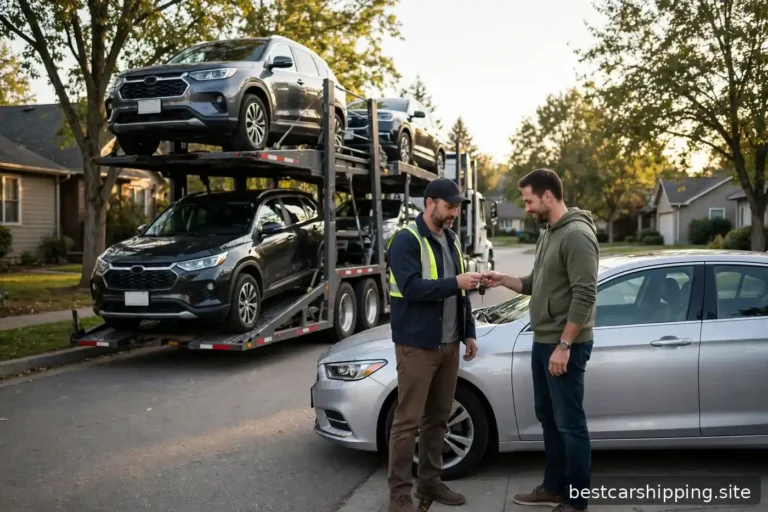
Delivery of an inoperable vehicle has one key difference: it has to come off the trailer the same way it went on. The receiving carrier or driver needs winch capability at the delivery end too — confirm this in advance, especially if the delivery location is different from pickup (different driver, different equipment).
Make sure the delivery location can accommodate the process: a flat, paved surface with room for the trailer and ramps. And have your plan ready for what happens after the car rolls off — a tow truck, a trailer, or a repair shop appointment. The driver’s job ends when the car is on the ground; getting it from the curb to the garage is yours.
Inspect and document at delivery just as carefully as with a running car. Note any new damage on the Bill of Lading before signing — our Bill of Lading guide covers the inspection process step by step. With salvage and auction vehicles, the line between “pre-existing” and “new” damage is the entire claim, so your pickup photos are doing heavy lifting here.
FAQ
How much extra does it cost to ship a car that doesn’t run?
About $150 extra on the same route, assuming the vehicle rolls, steers, and brakes. If it doesn’t roll or steer, forklift or specialty loading applies and the surcharge is much higher.
Can any car carrier ship an inoperable vehicle?
No. The carrier needs a winch, and the driver needs to know in advance. Most open carriers have winches; some enclosed specialists don’t handle inoperable vehicles. Always confirm winch capability and disclose the condition when booking.
What if my car doesn’t roll, steer, or brake?
It needs forklift loading, which requires specialized equipment at both pickup and delivery. Far fewer carriers offer this, the cost is substantially higher than the standard $150 winch fee, and you’ll need a longer booking lead time.
Do I have to tell the shipping company my car doesn’t run?
Yes — at booking, not at pickup. An undisclosed inoperable vehicle can’t be loaded by a standard dispatch, leading to failed pickups, missed-pickup fees, and rebooking costs that dwarf the winch surcharge.
Will insurance cover my inoperable car during shipping?
The carrier’s cargo insurance covers new transit damage the same as a running car, but pre-existing damage — which inoperable vehicles often have plenty of — is excluded. Thorough pickup photos and an accurate Bill of Lading are essential. Our insurance guide covers what’s excluded.
Can I ship a salvage-title or flood-damaged car?
Yes, salvage and flood-damaged cars ship regularly, but disclose the title status and damage type explicitly. Some carriers decline flood vehicles, and fluid leaks must be contained before loading.
Sources: distance-tier pricing from CitizenShipper’s 2026 cost breakdown; booking and prep practices from Move.org’s cheapest-way guide.