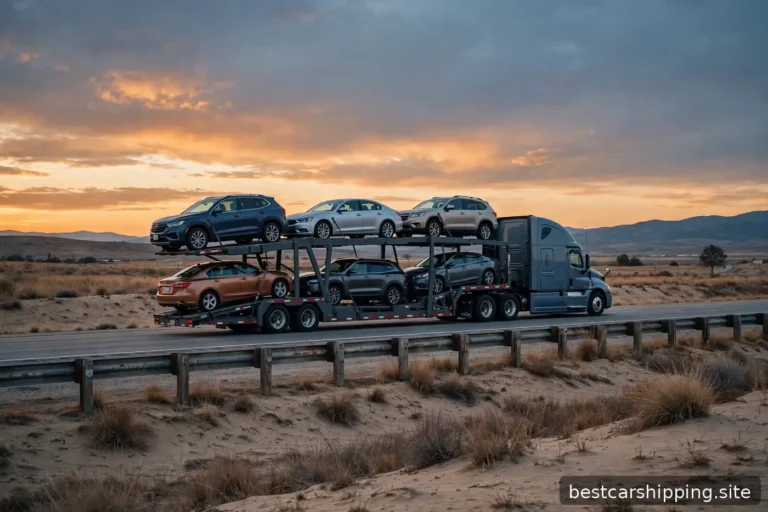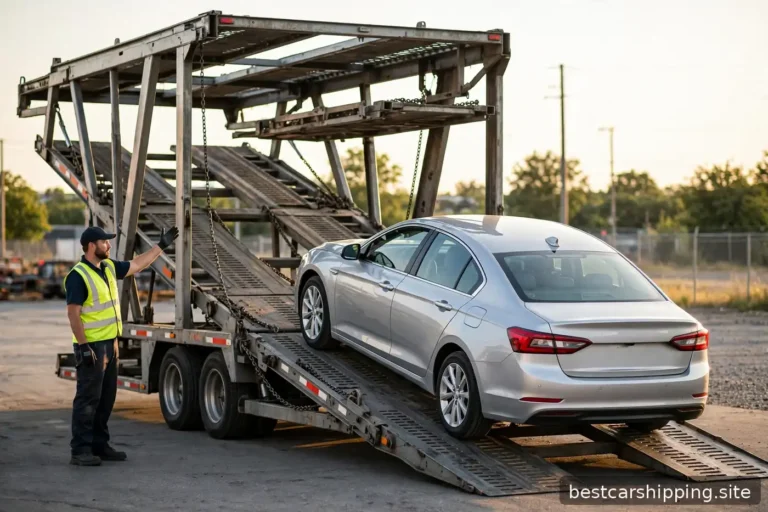
Bill of Lading: The Most Important Car Shipping Document
The Bill of Lading is the legal record of your car’s condition at pickup and delivery — and the foundation of any damage claim. Inspect carefully, notate every scratch and dent on it, photograph everything, and never sign a blank or pre-filled one. Here’s how the document works and how to use it to protect yourself.
Of every document in car shipping — the quote, the contract, the insurance certificate — the Bill of Lading matters most when something goes wrong. It’s the contemporaneous record, signed by both you and the driver, of exactly what condition your car was in when it changed hands. Twice: once at pickup, once at delivery. If those two records differ, you have a claim. If they’re vague, blank, or missing, you have an argument you’ll probably lose.
Most people treat the BOL as paperwork to get through. Treat it as the legal instrument it is, and the ten minutes it takes will protect a five-figure asset.
What the Bill of Lading is
The Bill of Lading (BOL) serves three functions in one document:
- A receipt. It confirms the carrier took possession of your vehicle — identifying it by make, model, year, VIN, and color.
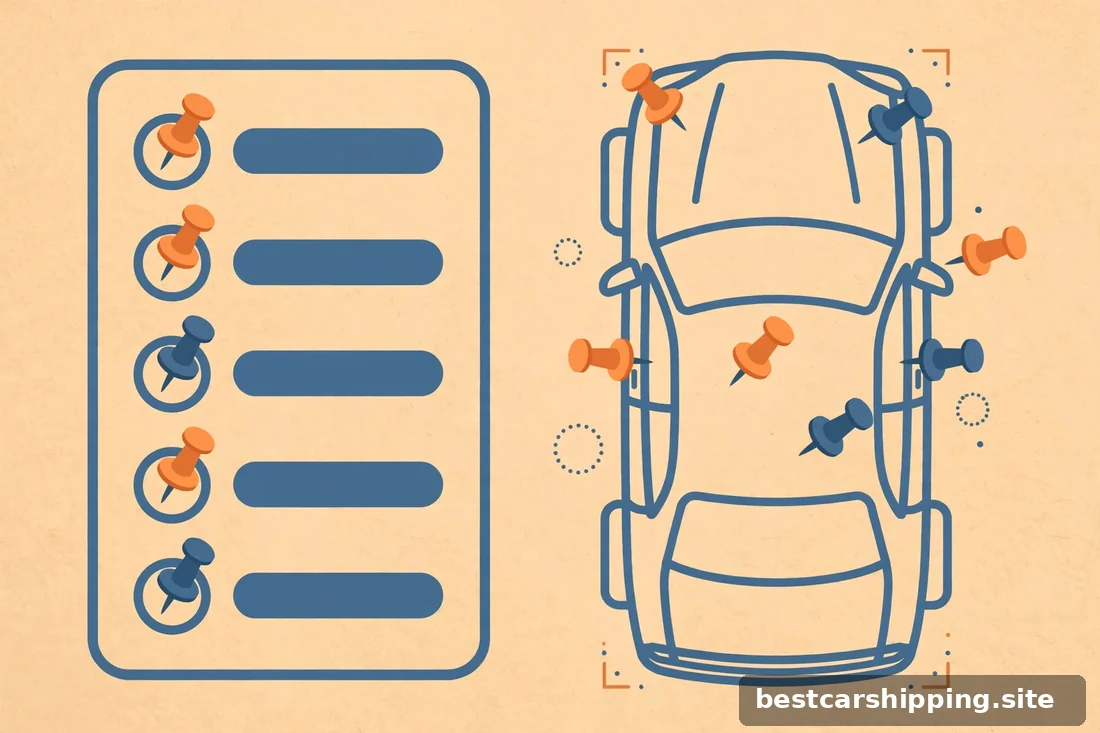
- A condition report. It records the vehicle’s condition at pickup and delivery, usually on a vehicle diagram where the driver marks existing damage: scratches, dents, chips, and other imperfections.
- A contract of carriage. It incorporates the terms under which the vehicle is transported, including liability terms and the claims process.
You’ll encounter it twice: the driver presents it at pickup for the initial inspection and signatures, and again at delivery for the final inspection and signatures. Both copies — pickup and delivery — matter. The pickup BOL establishes the baseline; the delivery BOL establishes what changed. A damage claim is essentially the difference between the two.
Note: your broker contract covers price and terms; the BOL covers the physical handoff. You need both.
The pickup inspection: step by step
The driver should walk around the car with you and mark every imperfection on the BOL’s vehicle diagram. Don’t let this be rushed. Here’s the process:
- Wash the car before pickup. A dirty car hides scratches and dents. The driver can only notate what they can see — and so can you. A clean car makes an accurate inspection possible. (This is also step one in our car prep checklist.)
- Do the walkaround together, in good light. Daylight is ideal. If pickup happens at night or in a dim garage, use your phone’s flashlight. Don’t accept “it looks fine” without the walkaround.
- Check every panel. Front and rear bumpers, all four doors, hood, trunk, roof, mirrors, wheels, and glass. Crouch down for lower panels and rocker areas — drivers sometimes miss low damage that becomes a dispute later.
- Note the interior condition if the BOL includes it — seats, dashboard, and any aftermarket equipment.
- Record the odometer reading and fuel level. Mileage fraud is rare, but the reading is part of the record.
- Note mechanical condition. If the car is inoperable, that goes on the BOL — along with exactly what doesn’t work. (See our inoperable shipping guide for disclosure rules.)
- Review the diagram before signing. Make sure every mark you discussed is actually on the paper. Drivers are human; marks get missed.
- Sign only when it accurately reflects the car. Then take your copy — photograph it with your phone as backup.
If the driver resists doing a thorough inspection or pressures you to “just sign,” that’s a serious red flag. A carrier that doesn’t want a condition record is a carrier planning to dispute one.
Key takeaways
- Wash the car before pickup — inspections are only as good as what’s visible.
- Walk every panel with the driver, in good light, and verify the diagram before signing.
- Record odometer, fuel level, and mechanical condition on the BOL.
How to notate damage correctly
Vague notation is almost as bad as none. “Scratches” with no location is disputable; “3-inch scratch, driver rear door, mid-panel” is evidence. Be specific:
- Location: which panel, and where on the panel (e.g., “passenger front fender, near wheel arch”).
- Type: scratch, dent, chip, scuff, crack — use the right word. A scratch (paint surface) and a dent (panel deformation) are different damage.
- Size: approximate length or diameter. “Quarter-sized dent” or “6-inch scratch” beats “small dent.”
- Use the diagram. The BOL’s vehicle outline exists for this — make sure marks land on the right panel of the diagram, not just in the margins.
Common marks and what they mean vary by carrier (X for scratch, D for dent, etc.), so ask the driver to explain their notation key. If the key isn’t printed on the BOL, write the meanings in the margin yourself and have the driver initial it. It takes thirty seconds and removes ambiguity later.
Don’t forget the often-missed spots: windshield chips, wheel curb rash, mirror housings, antenna, spoiler edges, and the roof. Roof damage is the most commonly missed — stand back and look, or ask the driver to note “roof not inspected” if it genuinely can’t be seen (better an honest gap than a false clean record).
Photos: your second witness
The BOL is the official record; your photos are the corroboration. Together they’re very hard to dispute. At pickup:
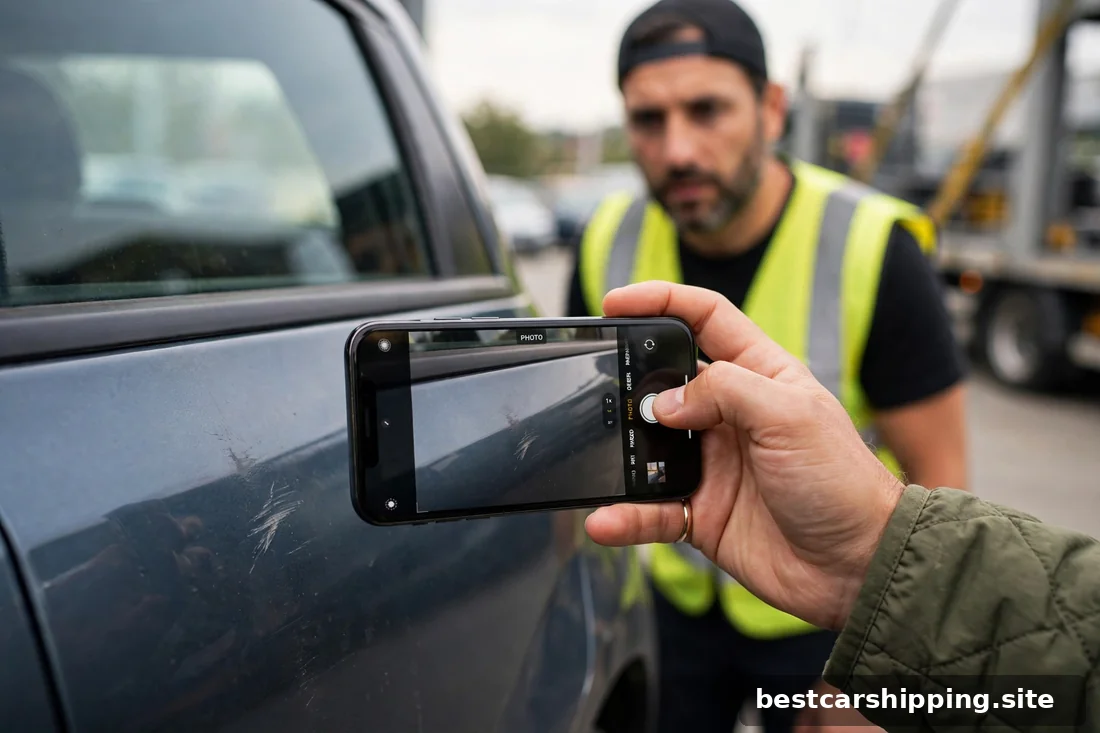
- Photograph all four sides, plus front and rear 3/4 angles. Six to eight exterior shots minimum.
- Close-ups of every existing imperfection noted on the BOL — each scratch and dent gets its own photo.
- Odometer, VIN plate, and fuel gauge.
- The BOL itself after both parties sign.
- Timestamp on. Make sure your phone’s date/time is correct; the metadata is part of the evidence.
Repeat the full set at delivery, before the car leaves the drop-off location. Delivery photos taken in the driver’s presence, showing the car still at the delivery spot, carry the most weight. If you find damage, photograph it from multiple angles with something for scale (a coin, your hand) before anything is moved.
Store both sets somewhere you won’t lose them — cloud backup, not just the camera roll. Claims can take weeks; phones get replaced.
Why you never sign a blank BOL
This is the rule the title promises, and it deserves its own section: never sign a blank or incomplete Bill of Lading. Not at pickup, not at delivery, not “we’ll fill it in later,” not “it’s just a formality.”
A signed blank BOL is a signed statement with no content — the carrier can complete it afterward in whatever way serves them. In a damage dispute, your signature on the document is treated as your agreement with its contents. If the contents were added after you signed, you’ve agreed to a record you never saw.
Specific situations to refuse:
- “Sign here, I’ll do the inspection myself.” No. The inspection happens with you present, or it doesn’t happen.
- A BOL pre-marked “no damage” or “clean” before you’ve inspected. Cross it out, do the real inspection, and make the driver correct it.
- Pressure to sign quickly because the driver is in a hurry. The inspection is part of the driver’s job. Ten minutes is normal.
- At delivery: “sign first, then inspect.” Inspect first, notate damage, then sign. Signing a clean delivery BOL and finding damage afterward is one of the most common ways claims die.
If a driver won’t do a proper inspection, document the refusal (a quick video of you asking and the driver declining is powerful), note it on the BOL yourself, and report it to the broker immediately. Then consider whether you want this carrier handling your car at all.
Key takeaways
- A signed blank BOL is a signed statement with no content — never do it.
- Inspect first, then sign. At delivery, never sign before the walkaround.
- Pre-marked “clean” BOLs get corrected before your signature goes on.
The delivery inspection
Delivery is where the BOL earns its keep. The process mirrors pickup:
- Don’t sign anything until you’ve inspected. This is the whole game. The driver may be in a hurry; inspect anyway.
- Walk the car with the pickup BOL and your pickup photos in hand. Compare panel by panel. You’re looking for differences, not perfection.
- Check in the same light conditions if possible. Damage visible in daylight can hide at night — use your phone light aggressively.
- Notate any new damage on the delivery BOL with the same specificity: location, type, size.
- Have the driver sign acknowledging the noted damage. If the driver refuses to sign, note the refusal on the BOL and photograph the document.
- Take your copy and photograph it.
If you find damage at delivery
Stay calm and work the process:
- Notate it on the delivery BOL before signing. This is the step everything depends on. No notation, no claim — or at least, a much harder one.
- Photograph the damage extensively, in the driver’s presence, before the car is moved.
- Get the driver’s name and the carrier’s information if you don’t already have it.
- Notify the broker and carrier in writing within 24 hours. Most contracts set short claim windows — some as short as 24–48 hours. Email creates a timestamped record; follow up any phone call with an email summary.
- Get repair estimates from a shop you trust. The carrier’s insurer may arrange their own inspection.
- File the formal claim with the carrier (their cargo insurer handles it), attaching the pickup BOL, delivery BOL with damage noted, pickup and delivery photos, and repair estimates.
Our insurance guide covers the claims process in detail.
Keeping your copies
Keep everything until the shipment is fully closed out — and then keep it a little longer:
- Signed pickup BOL (photo + paper copy)
- Signed delivery BOL (photo + paper copy)
- Pickup and delivery photo sets, backed up to cloud storage
- The booking contract and all quote documentation
- All correspondence with the broker and carrier
- Payment receipts
Keep them at least six months — a year is safer. Storage is free; regret is expensive.
Key takeaways
- The BOL is your damage claim’s foundation: pickup condition vs. delivery condition, both signed.
- Notate damage with location, type, and size — vague marks are disputable.
- Photos corroborate the BOL; take full sets at pickup and delivery.
- File damage claims within 24–48 hours; keep all documents for at least six months.
FAQ
What is a Bill of Lading in car shipping?
It’s the legal document recording your vehicle’s condition at pickup and delivery, signed by you and the driver. It serves as a receipt, a condition report, and the contract of carriage — and it’s the primary evidence in any damage claim.
Who provides the Bill of Lading?
The carrier (the driver at pickup). If you’re working with a broker, the broker arranges the shipment but the carrier’s driver brings the BOL. Confirm before pickup day that a proper inspection and BOL will be completed.
What happens if I lose my Bill of Lading?
Your photos of the signed BOL (which is why you photograph it) serve as backup. You can also request a copy from the carrier or broker. This is why the photo habit matters — paper gets lost, cloud photos don’t.
Can I refuse to sign the Bill of Lading?
You can and should refuse to sign a blank, incomplete, or inaccurate BOL. What you can’t reasonably do is refuse the inspection process entirely — it’s part of the shipment. If the driver won’t conduct a proper inspection, document the refusal and contact your broker immediately.
Does the Bill of Lading show the price I paid?
Usually it shows the amount due to the carrier at delivery (the balance), which may differ from your total broker price. Keep your booking contract for the full price picture — the BOL is about the physical handoff, not the complete financial terms.
How long do I have to file a damage claim?
It depends on your contract — commonly 24 to 48 hours after delivery for notifying the carrier, with formal claim filing windows varying. Check your contract’s specific deadline before pickup day, and always notify in writing within 24 hours of discovering damage.
Sources: pickup/delivery and documentation practices per Move.org’s cheapest-way guide (documents needed: bill of lading and insurance terms); pricing context from CitizenShipper.