Car Shipping Insurance: What’s Covered and What’s Not
Yes, your car is insured during shipping — but only by the carrier’s cargo policy, which covers new transit damage to the vehicle itself. It does not cover personal items left inside, pre-existing damage, or mechanical issues that develop in transit. Always verify the assigned carrier’s cargo coverage in writing before your car is loaded.
Whose policy actually covers your car?
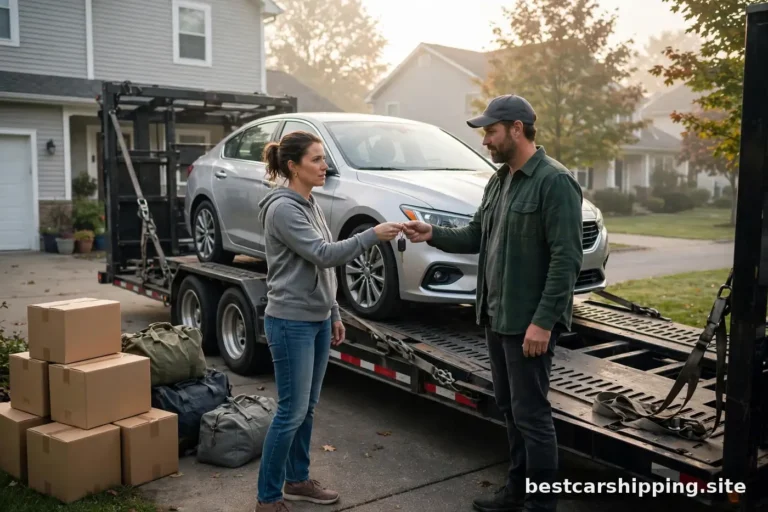
Here’s the fact that surprises most first-time shippers: your car is covered by the carrier’s cargo insurance, not your personal auto policy, while it’s on the truck. The company that physically hauls your vehicle — the carrier, the one with the truck — carries motor truck cargo insurance that pays for damage to vehicles in its care during transit.
There’s a catch, and it’s an important one. Your booking is often with a broker, not the carrier. Brokers arrange the shipment but don’t drive the truck, and their insurance (if any) is not the cargo policy protecting your car. If you booked through a broker, the coverage that matters belongs to the carrier assigned to your load. This is why “we’re fully insured” from a broker’s sales rep means almost nothing until you see the actual carrier’s certificate of insurance. If broker-vs-carrier still feels fuzzy, our broker vs carrier explainer breaks down who does what — and who holds which policy.
The FMCSA’s insurance rules add another layer worth understanding. Federal regulations require interstate carriers to file proof of public liability coverage (at least $750,000 for most freight carriers), but cargo insurance — the coverage that pays for damage to your car — is not federally required for general freight carriers. Only household goods movers must file cargo coverage. In practice, nearly every broker requires carriers to hold at least $100,000 in motor truck cargo before they’ll tender a load, but that requirement comes from market contracts, not federal law. Pro Insurance Group’s FMCSA insurance requirements guide lays this out clearly: the federal filing covers liability to others; cargo coverage is something you verify yourself.
Key takeaways
- The carrier’s cargo policy covers your vehicle in transit — not your personal auto policy, and not the broker’s paperwork.
- The FMCSA does not federally require cargo insurance for auto carriers; the $100,000 figure most people hear comes from broker contracts, not federal law.
- Always verify the assigned carrier’s coverage, not just the company you booked with.
What’s typically covered
Carrier cargo policies generally cover new, physical damage to your vehicle during loading, transit, and unloading:
- Collision damage during transit — dents, scratches, and body damage from an accident involving the carrier’s truck.
- Damage from road debris and weather events — hail, wind-blown objects, and falling debris that strike the vehicle while it’s on the trailer.
- Loading and unloading damage — scrapes or dents caused by the driver during ramp operations, winching, or strap placement.
- Fire, theft, and vandalism on the trailer during the carrier’s custody (policies vary; confirm with the specific certificate).
- Total loss — if the vehicle is destroyed in an accident or stolen from the carrier’s control, cargo insurance responds up to its limit.
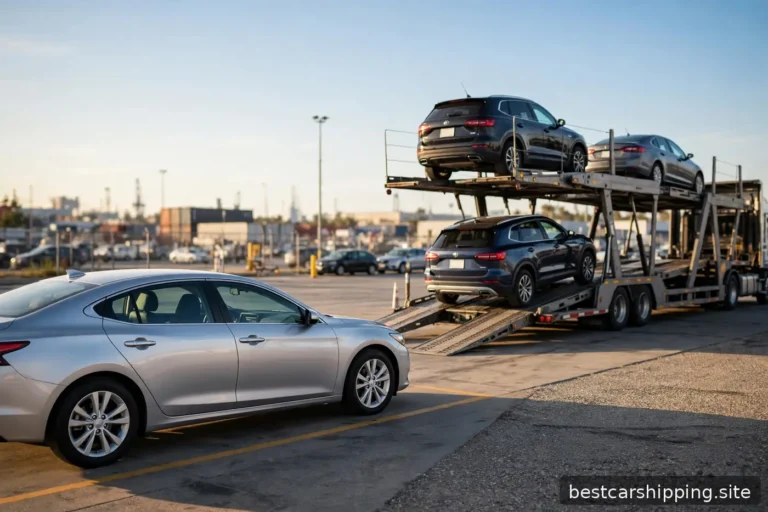
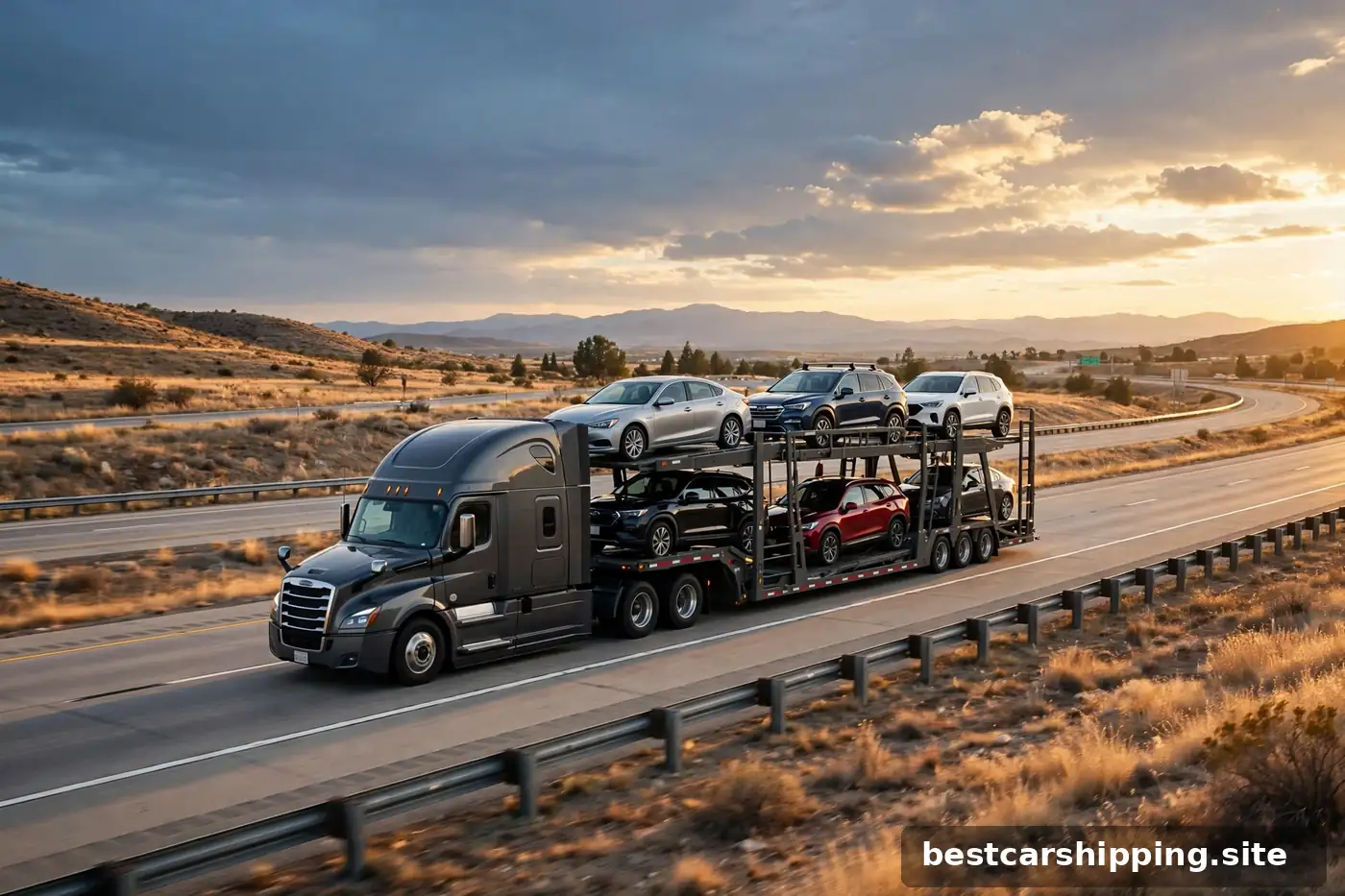
Coverage applies per vehicle up to the policy limit, but that limit is shared across every vehicle on the trailer. A standard open carrier hauls up to nine or ten vehicles, so a $100,000 cargo policy spread across ten cars gets tight fast if several are damaged in one incident. For everyday cars this is rarely a problem; for high-value vehicles, it’s the best reason to ask for a carrier with $250,000+ in cargo coverage.
What’s typically NOT covered
The exclusions are where claims go to die. Before you book, understand these — because every one of them is a conversation people have after something goes wrong:
- Personal items left in the car. Cargo insurance covers the vehicle, not its contents. Laptops, clothes, tools, aftermarket electronics — none of it is covered. Most carriers also cap personal items at around 100 lbs (if allowed at all), and unsecured items can shift and damage your interior, which also isn’t covered. Remove everything you can’t afford to lose.
- Pre-existing damage. Scratches, dents, and paint chips noted on the pickup inspection are excluded. This is why photographing your car before loading is non-negotiable — without proof of condition, every dent becomes an argument about when it happened. See our Bill of Lading guide for how the inspection paperwork protects you.
- Mechanical breakdowns. If the battery dies, the starter fails, or the transmission acts up in transit, cargo insurance doesn’t cover it. The policy covers damage to the car from an external cause, not the car’s own mechanical health. (Inoperable vehicles ship all the time, but they’re loaded with that condition disclosed and documented.)
- Acts of God beyond the policy’s named perils. Flood damage, earthquakes, and other natural disasters may be excluded depending on the policy wording. Ask specifically about flood and storm coverage if you’re shipping through hurricane or wildfire zones.
- Damage from “inherent vice.” If your car had rust, loose trim, or a convertible top that was already failing, damage that stems from that pre-existing condition can be excluded.
- Aftermarket parts and modifications may be excluded or capped unless disclosed and documented in advance. Lift kits, ground effects, and custom bodywork should be listed on the order.
- Diminished value. The policy pays to repair damage; it generally doesn’t pay for the reduction in your car’s resale value after a repair.
Key takeaways
- Personal belongings, pre-existing damage, and mechanical failures are the three exclusions that surprise people most.
- Aftermarket modifications should be disclosed and documented, or repairs may not cover them.
- Cargo policies pay for repairs, not diminished resale value.
Coverage limits: why the dollar amount matters
Cargo insurance isn’t yes-or-no — it’s a numbers question: the per-incident limit (most reputable carriers carry $100,000–$250,000; enclosed specialists often $250,000–$1M+), the deductible (often $1,000–$2,500, paid by the carrier before insurance responds), and your vehicle’s value against the limit. If you’re shipping a $60,000 truck on a trailer with a $100,000 shared cargo policy and nine other vehicles, you’re counting on no multi-car incident. For vehicles worth more than roughly half the cargo limit, ask for higher coverage.
One more wrinkle: endorsements can add per-shipment sublimits invisible on the certificate — which is why calling the insurer (step 4 below) matters.
How to verify coverage before booking
Don’t take “fully insured” at face value. Run this checklist after a carrier is assigned and before your car is loaded:
- Get the carrier’s legal name, MC number, and USDOT number. If you booked through a broker, ask who the assigned carrier is. No assignment, no verification.
- Look it up on FMCSA’s SAFER system (safer.fmcsa.dot.gov). Confirm active authority and a matching company name — this verifies the carrier is real and authorized, though it doesn’t show cargo coverage.
- Ask for a certificate of insurance (COI) — a document, not a verbal promise. Check that it lists “Motor Truck Cargo” or “Cargo,” and note the limit and expiration date. Confirm the cargo line specifically hasn’t lapsed; certificates have shown current liability with expired cargo endorsements.
- Call the insurer or agent on the certificate. The COI is generated by the carrier or their agent — errors and occasional fraud happen. A two-minute call confirming the policy is active at the stated limits is the strongest verification available to a consumer.
- Read the exclusions. Ask for the policy’s main exclusions in writing — personal items, aftermarket parts, natural disasters.
Do this before pickup day. Once the truck arrives and the driver is waiting, you have no leverage and no time.
Your own auto policy’s role
Your personal auto insurance plays a supporting role, not the lead. A few things to know:
- Your comprehensive coverage may apply as a backup. If the carrier’s cargo insurance denies a claim or the carrier disappears, your own comprehensive coverage can sometimes respond — minus your deductible, and subject to your policy’s terms. Call your insurer before shipping to ask how they handle transport damage.
- Your policy does not replace the carrier’s. Don’t let anyone tell you “your insurance covers it” as a reason to skip verifying the carrier’s coverage. Your insurer expects the carrier to pay first; yours is a backstop. A quick pre-shipping call confirming transport-claim handling removes guesswork later.
None of this requires buying extra insurance from the broker. Supplemental “shipping insurance” upsells exist, but for most vehicles, a verified carrier cargo policy plus your own comprehensive coverage as a backstop is sufficient. If a broker pushes an insurance add-on hard, ask exactly what gap it fills — in writing.
How a damage claim actually works
If your car arrives damaged, the claim process is mechanical and time-sensitive:
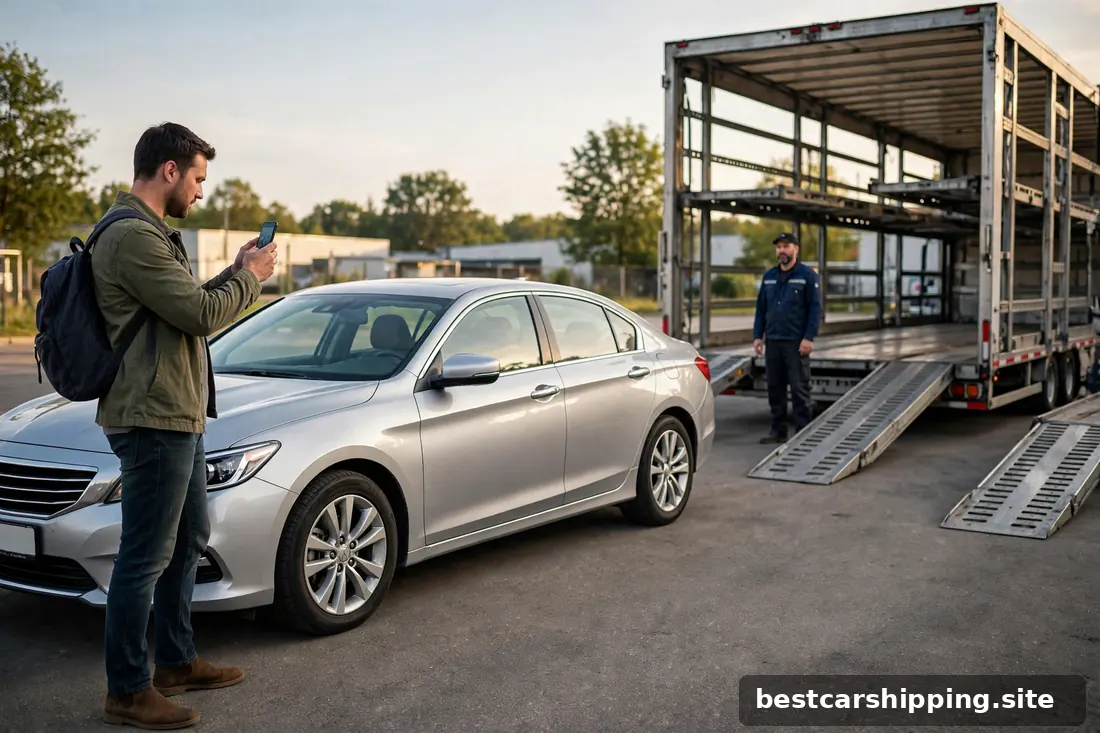
- Note the damage on the Bill of Lading at delivery — before you sign. The most important step. An unsigned or “clean” BOL makes any later claim dramatically harder. Walk around the car with the driver, compare against your pickup photos, and write every new scratch and dent on the delivery inspection. Our Bill of Lading guide walks through the inspection line by line.
- Photograph everything at delivery, in the driver’s presence, before the car leaves the drop-off spot.
- Notify the broker and carrier in writing within 24–48 hours. Most contracts have short claim-filing windows.
- Get repair estimates from a shop of your choice; the carrier’s insurer may want its own inspection too.
The pattern in disputed claims is almost always the same: damage not noted on the BOL, claim filed late, or the carrier’s coverage unverifiable after the fact. Every verification step earlier in this article exists to prevent exactly those three outcomes.
Key questions for pickup week
Ask these before pickup day — a company that can’t answer clearly is telling you something: the assigned carrier’s legal name, MC and USDOT numbers; the cargo limit and deductible (with certificate); whether personal items and aftermarket parts are covered; weather/flood exclusions; the claim-filing deadline; and exactly who to contact for a claim, broker or carrier.
Key takeaways
- Verify the assigned carrier’s cargo coverage before pickup: certificate in hand, limits confirmed, exclusions understood.
- Note all damage on the Bill of Lading at delivery before signing — no clean signature on a damaged car.
- Your own comprehensive policy is a backup, not the primary coverage.
- File damage claims fast — most contracts give you 24–48 hours, not weeks.
FAQ
Is my car insured when it’s shipped?
Yes — the carrier’s cargo insurance covers new transit damage to the vehicle itself. But it’s not automatic protection against everything: personal items, pre-existing damage, and mechanical issues are excluded, and the coverage is only as good as the policy the assigned carrier actually holds.
Does the broker’s insurance cover my car?
No. Brokers arrange shipments but don’t transport vehicles. The cargo policy covering your car belongs to the carrier. If you booked through a broker, ask for the assigned carrier’s name, MC number, and certificate of insurance.
How much cargo insurance does a carrier need?
Federal law doesn’t set a cargo insurance minimum for auto carriers — only household goods movers must file cargo coverage with the FMCSA. In practice, brokers typically require carriers to hold at least $100,000 in motor truck cargo before tendering loads. For vehicles worth over $50,000, look for carriers with $250,000 or more.
Does car shipping insurance cover personal items in the car?
No. Carrier cargo policies cover the vehicle, not its contents. Remove valuables before pickup. Most carriers allow only a small amount of personal items (often up to ~100 lbs, sometimes none), and anything inside travels at your own risk.
Should I buy extra shipping insurance from the broker?
Usually unnecessary for everyday vehicles if the carrier’s cargo coverage is verified — your own comprehensive auto policy serves as a backstop. If a broker pushes an insurance upsell, ask exactly what gap it fills and get the answer in writing before paying.
What if the carrier damages my car and won’t pay?
File a written claim within the contract’s deadline (often 24–48 hours), using your delivery Bill of Lading with the damage noted. If the carrier won’t cooperate, contact the broker, your own auto insurer, and consider an FMCSA complaint. This is why verifying coverage and documenting condition before pickup matters.
Sources: cost and coverage context from CitizenShipper’s 2026 cost breakdown; FMCSA insurance filing facts from Pro Insurance Group’s FMCSA requirements guide.