Open vs Enclosed Car Transport: Which Should You Choose?
# Open vs Enclosed Car Transport: Which Should You Choose?
The honest short version: choose open transport for a daily driver and enclosed for a car worth protecting — a classic, exotic, luxury, or low-clearance vehicle. Open typically costs 30–60% less, is far easier to book, and is the same way brand-new cars travel from the factory to the dealership.
Key takeaways
- Open transport is the industry standard: cheaper, widely available, and safe for everyday vehicles.
- Enclosed costs roughly 30–60% more and takes longer to book because fewer enclosed trucks exist.
- Enclosed earns its premium for high-value, classic, exotic, or low-clearance cars — and in harsh-weather seasons.
- For a typical daily driver, open transport is not a compromise. It’s the normal choice.
What open transport actually is
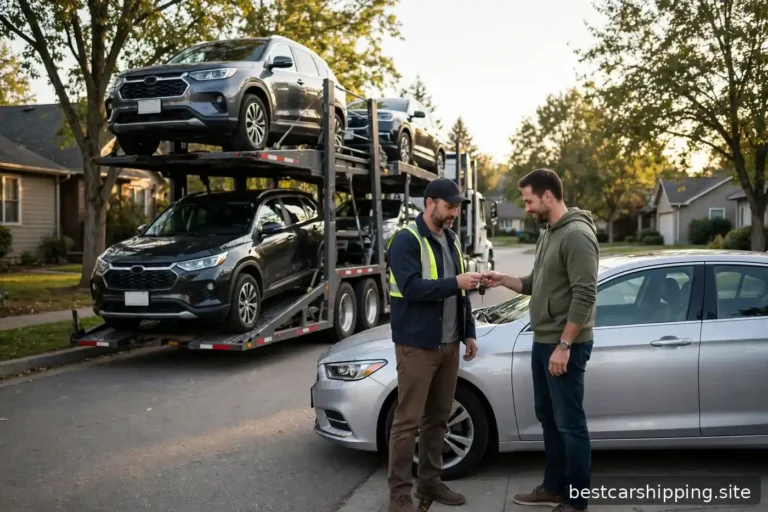
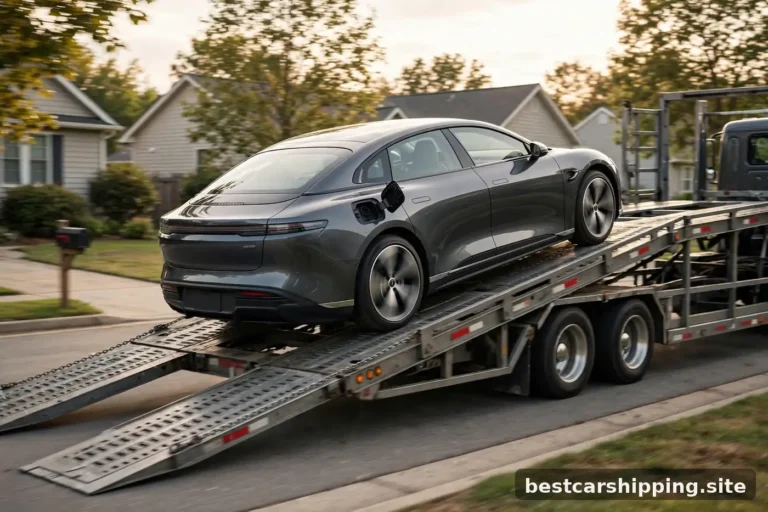
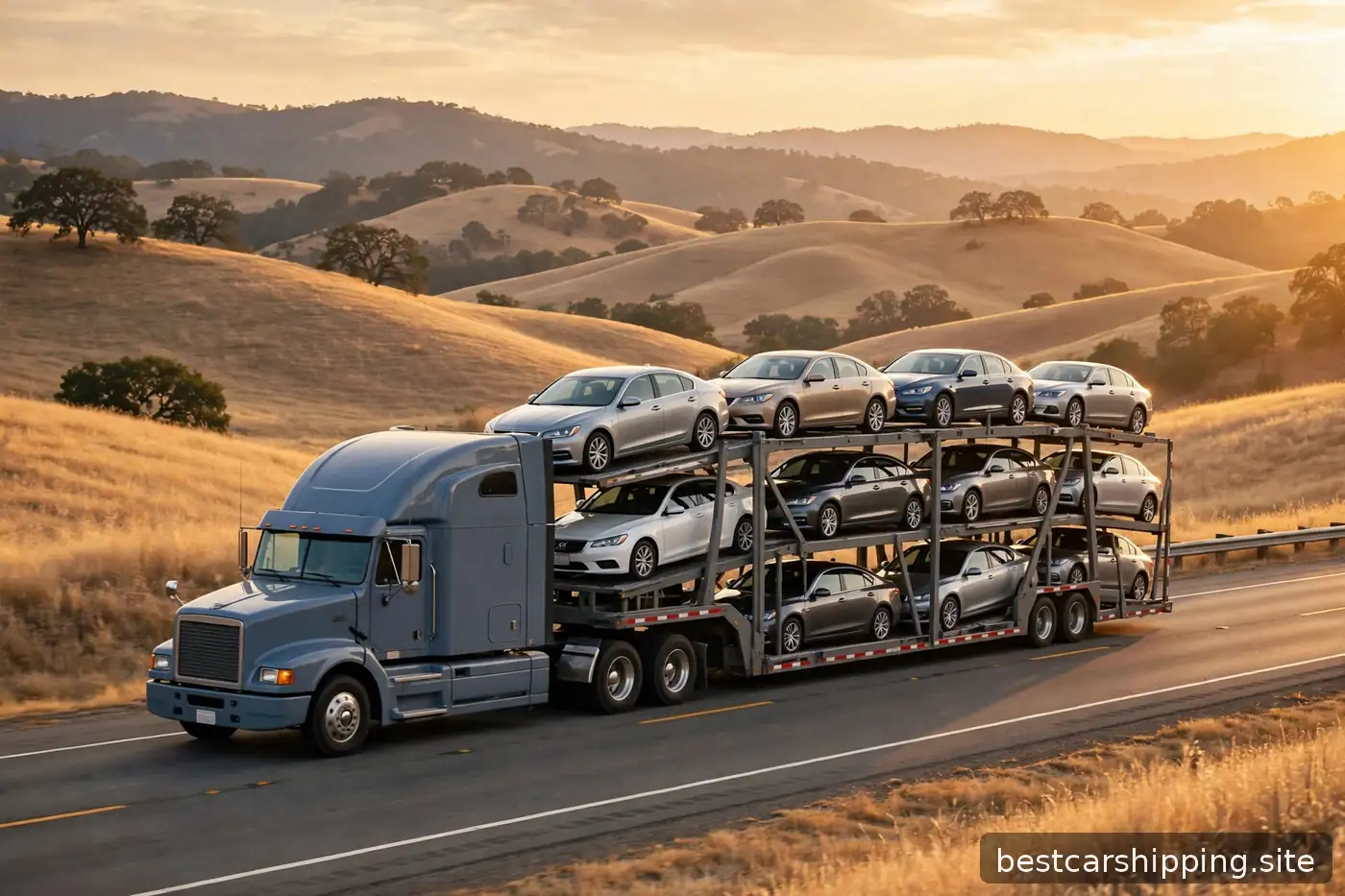
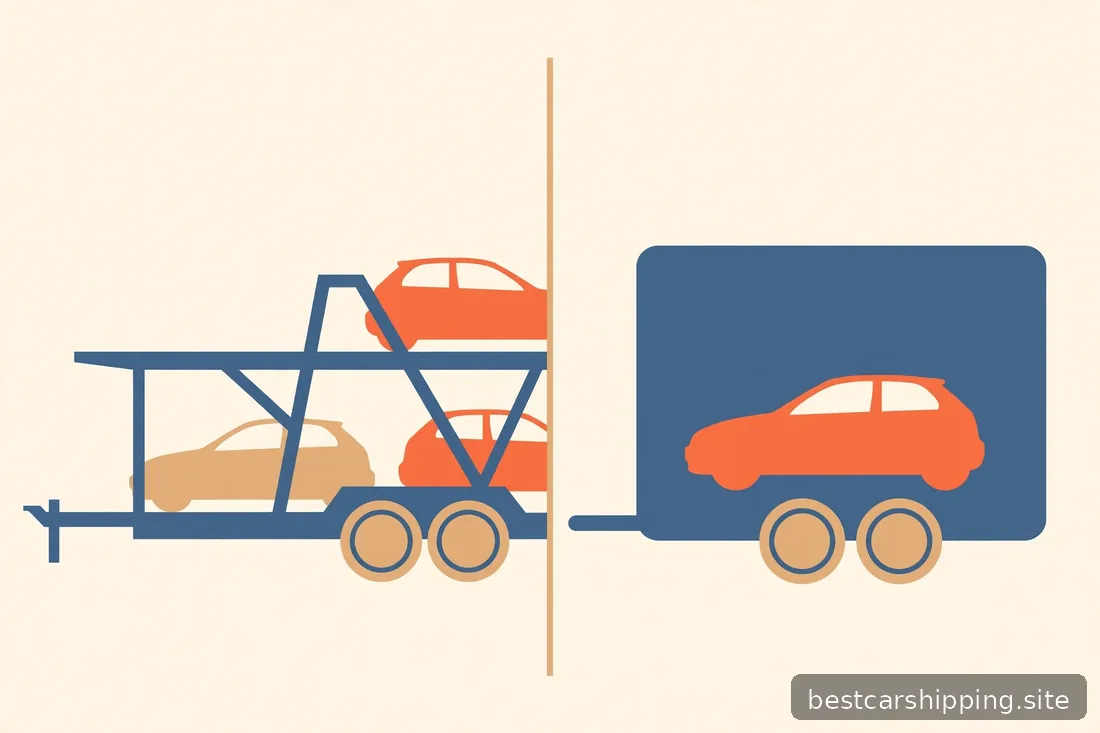
Open transport is the multi-level, open-air trailer you’ve seen on every interstate — the one delivering new cars to dealership lots. Your car rides on an exposed deck, strapped down by its wheels, along with 7–10 other vehicles on a full load.
This matters more than people realize: every new car sold in America has already traveled on an open trailer. Dealerships don’t pay the enclosed premium for factory-fresh inventory, because the exposure simply isn’t a meaningful risk for standard vehicles. Your daily driver is no more vulnerable on an open trailer than it is in your own driveway during a rainstorm.
What open transport does expose your car to:
- Weather — rain, snow, sun. Same as parking outside.
- Road dust and grime. Expect a wash-worthy layer on arrival.
- The small, non-zero risk of road debris — kicked-up gravel is the main real-world hazard, and chips are uncommon but possible.
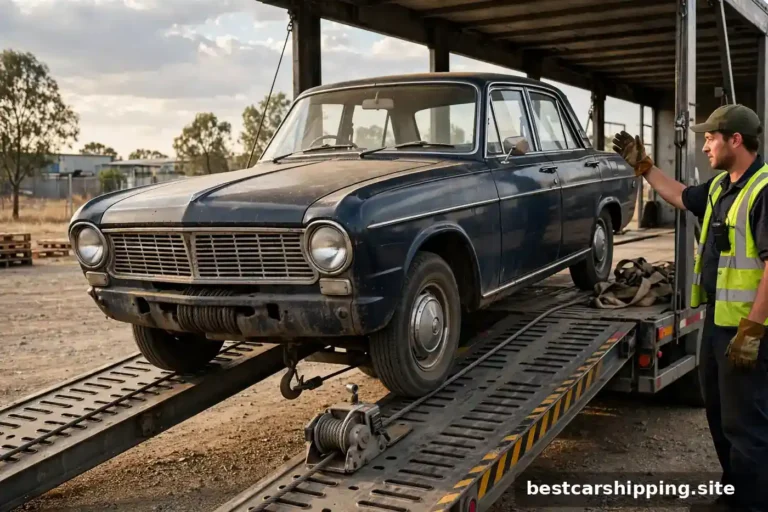
Carriers strap vehicles down by the wheels (soft straps are standard on quality equipment), and open trailers are everywhere — which means more competing carriers, faster dispatch, and lower prices. On a common route, you can usually book open transport with a week or two of lead time and pay the lowest available rate.
What enclosed transport actually is
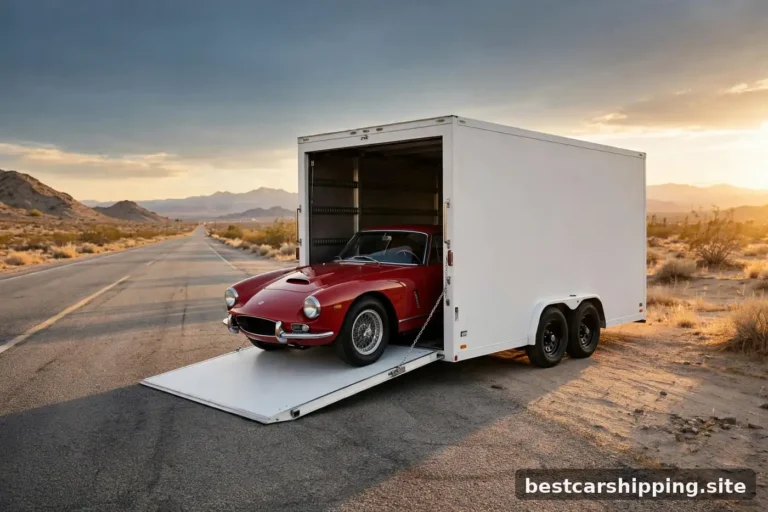
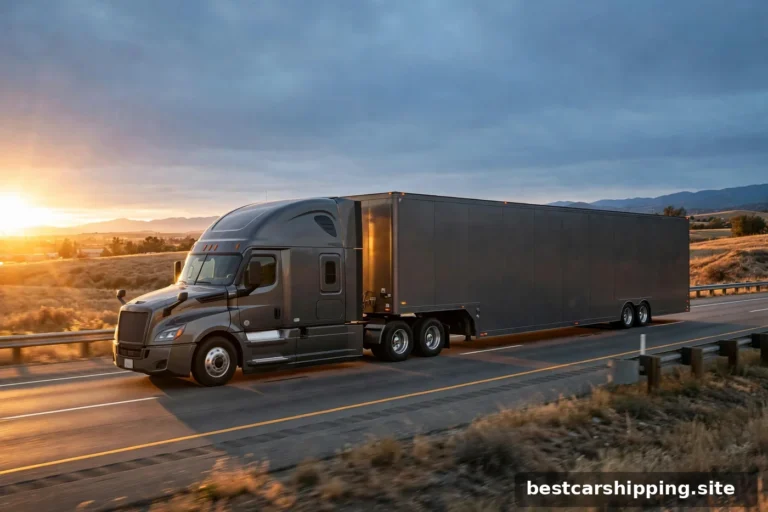
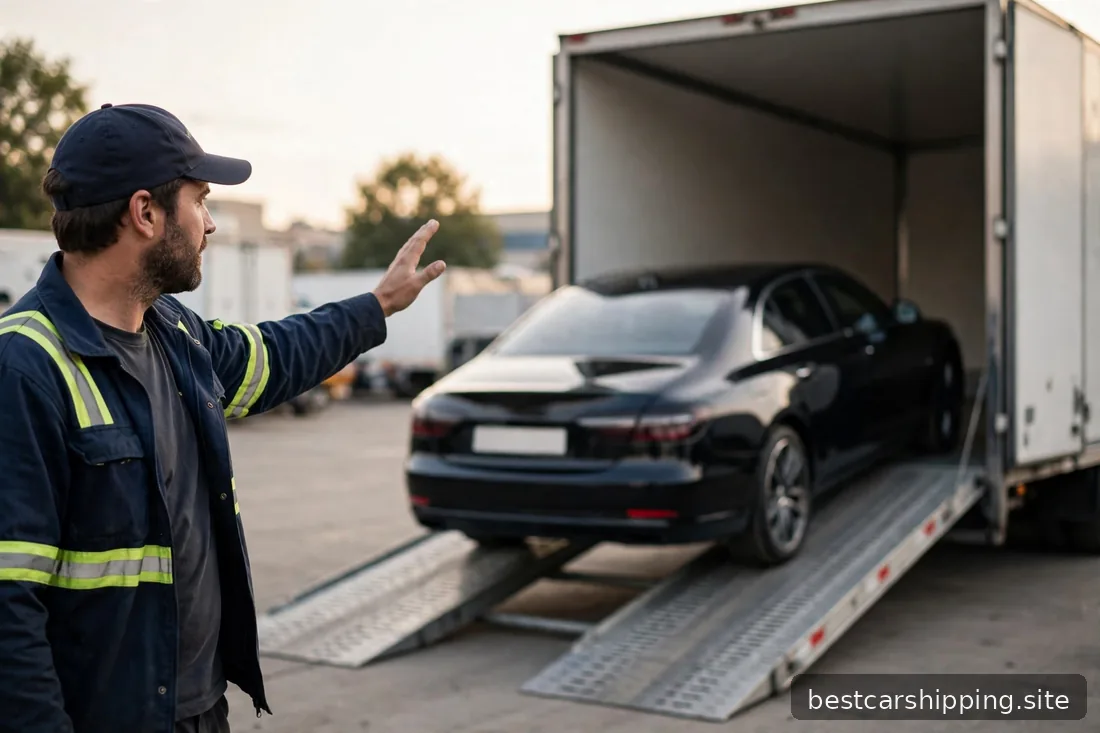
Enclosed transport puts your car inside a covered trailer — protected from weather, dust, and road debris for the entire trip. Most enclosed trailers carry only 2–7 vehicles (versus up to 10 on an open trailer), and many use liftgates instead of ramps, which matters for low-clearance cars that would scrape on a steep ramp.
The price premium — 30–60% over open on the same route — reflects real economics, not markup:
- Lower capacity. Fewer cars per load means each car must cover more of the carrier’s operating cost.
- Fewer trucks. Enclosed carriers are a small fraction of the fleet, so there’s less competition on any given route.
- Specialized handling. Enclosed drivers typically handle higher-value cargo and the equipment to match.
Enclosed also tends to take a little longer to book, for the same reason: fewer trucks, less flexibility. If you need enclosed transport on a tight deadline, book as early as you can.
As one carrier-side explainer from 2026 puts it, the premium “reflects lower carrier capacity, fewer available trucks, and the specialized handling many enclosed shipments require” — and published ranges put open transport at roughly $700 to $1,200 per 1,000 miles versus about $1,000 to $1,700 enclosed. That ratio is consistent with what CitizenShipper’s 2026 cost breakdown shows across distance tiers.
Side-by-side comparison
| Open transport | Enclosed transport | |
|---|---|---|
| Typical cost | Base rate | +30–60% over open |
| Protection | Exposed to weather, dust, road debris | Fully covered |
| Capacity | 7–10 vehicles per load | 2–7 vehicles per load |
| Availability | Abundant — most of the fleet | Scarce — small share of the fleet |
| Booking speed | Faster dispatch, more options | Slower — fewer trucks, plan ahead |
| Loading | Ramps | Often liftgates (better for low clearance) |
| Best for | Daily drivers, standard cars, dealer inventory | Classics, exotics, luxury, low-clearance |
For the numbers behind the “base rate” column, see our full car shipping cost guide — the distance table there gives you the 2026 open-transport bands.
Who really needs enclosed
Pay the premium when one of these is true:
- The car is worth a lot more than average. Classics, exotics, high-end luxury vehicles, collector cars. If a paint chip would cost you thousands, enclosed is cheap insurance.
- It’s low-clearance. Sports cars and modified vehicles that can’t handle steep ramps need the liftgate most enclosed trailers carry.
- The finish is irreplaceable. Custom paint, show cars, concours vehicles — anything where “a good detail will fix it” doesn’t apply.
- It’s an open-top vehicle you want sealed in. Convertibles ship fine on open trailers, but enclosed removes the one scenario owners worry about.
- You’re shipping through harsh weather and it matters to you. Winter salt spray on northern routes, desert dust on southwestern ones. Open transport handles both without damage in the vast majority of cases — but if the car’s value makes even cosmetic risk unacceptable, enclosed removes the question.
Notice what’s not on this list: “a new car.” New cars ship open from the factory. “A car I really like” isn’t a pricing category either — the question is whether the financial downside of cosmetic exposure justifies 30–60% more on the quote.
If your car falls in the classic/luxury bucket, also read how to ship a classic or luxury car safely — enclosed is only one piece of that puzzle (agreed-value insurance and photo documentation matter just as much).
When open transport is perfectly fine
For most people reading this, the answer is open. It’s the right call when:
- The car is a standard daily driver, family SUV, or commuter sedan.
- It’s a few years old and already has normal road wear.
- You’re shipping on a common route where open carriers are plentiful.
- Budget matters more than showroom-fresh arrival condition.
The fear that open transport means your car arrives “damaged” is mostly marketing. Cars arrive dusty; they arrive with road film; they arrive needing a wash. Actual transport damage on open carriers is uncommon, and when it happens, the carrier’s cargo insurance — not your choice of trailer — is what makes you whole. (See our car shipping insurance guide for what’s actually covered.)
One more honest point: some companies upsell enclosed hard because the margin is better for them. If a quote page defaults to enclosed or a salesperson pushes it for your 2019 Camry, that’s a sales tactic, not advice. The right question is always “what’s my car’s actual exposure risk?” — and for a normal car, the answer is “a wash.”
Enclosed options: soft-side vs hard-side
Not all enclosed trailers are identical. Two variants exist:
- Soft-side enclosed. Canvas or vinyl sides over a rigid frame. Cheaper than hard-side, protects against weather and most debris, but a determined object could still get through the fabric. Fine for most luxury cars.
- Hard-side enclosed. Solid metal walls, the maximum protection available. Costs the most, carries the fewest cars. This is what high-end exotics and irreplaceable collector cars travel in.
Most enclosed quotes you’ll receive are for hard-side trailers, but it costs nothing to ask which type you’re getting — and if you’re paying the premium for a genuinely valuable car, confirm it.
How to book enclosed without overpaying
Enclosed transport costs more by nature, but you don’t have to pay the top of the range. A few things that help:
- Book early. Enclosed trucks are scarce, so lead time matters even more than with open transport. Three or more weeks ahead is ideal; two is the minimum you should aim for.
- Be flexible on dates. A pickup window of several days lets the broker match you with an enclosed truck already running your corridor, which is always cheaper than summoning one specially.
- Compare enclosed quotes against each other, not against open ones. The 30–60% premium is the benchmark — if one enclosed quote is double the open price while another is 40% more, the second company is pricing the market honestly and the first is padding.
- Ask about soft-side. If your car needs weather protection but not a vault, soft-side enclosed sits between open and hard-side on price and is often enough.
- Don’t pay enclosed prices for open service. This sounds obvious, but verify the trailer type in writing before the truck arrives. If the contract says “enclosed” and an open trailer shows up, refuse the load and call the broker immediately.
And a note on timing: enclosed capacity tightens during the same peaks as everything else — summer moving season and the fall snowbird migration. If you’re shipping a valuable car south for the winter, the September/October booking window we describe in our snowbird car shipping guide applies double for enclosed.
Frequently asked questions
Is enclosed transport really safer?
It’s more protective — the car is sealed from weather and debris. “Safer” in the accident sense is roughly equal; enclosed carriers aren’t meaningfully less likely to crash. The premium buys cosmetic protection, not crash immunity.
Will my car get dirty on an open trailer?
Yes — expect road dust and grime, and wash it on arrival. That’s the entire practical downside for a normal car. It’s not damage; it’s dirt.
Can I watch my car being loaded?
Usually yes, and you should. Be present at pickup for the inspection and the Bill of Lading walkthrough regardless of trailer type — that’s your damage-protection paperwork. Never sign a blank one. Our Bill of Lading guide explains what to check.
How much more does enclosed cost for a cross-country move?
On a 2,500+ mile route where open runs $1,100–$1,700, enclosed typically lands around $1,800–$3,000+. See our cross-country car shipping cost guide for the full breakdown.
Is open transport okay for a leased car?
Yes. Lease agreements don’t require enclosed transport, and lease-return inspections allow normal road wear. Ship open and save the money — just document the car’s condition at pickup like you would with any shipment.
The decision is simpler than the industry makes it sound: if the car is ordinary, ship it open. If it’s special, pay for enclosed. Everything else is detail — and now you have the details.