How Much Does It Cost to Ship an SUV or Truck?
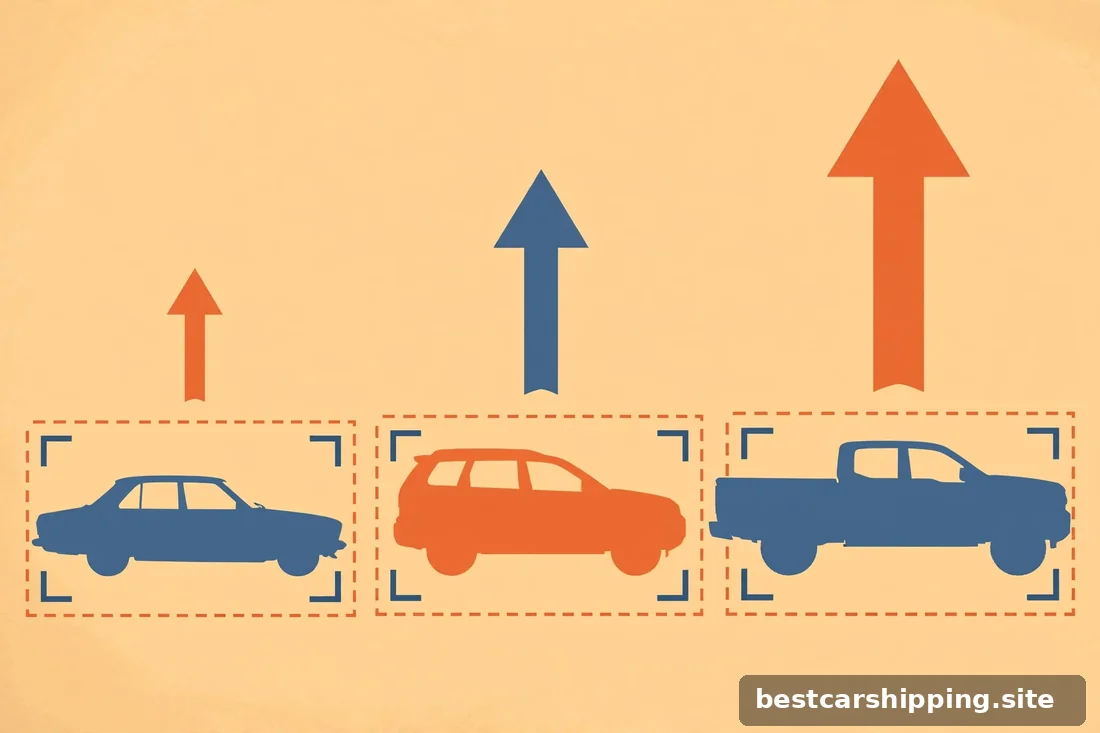
Shipping an SUV or pickup truck costs $100 to $450 more than shipping a sedan on the same route — because bigger, heavier vehicles consume more trailer space and weight capacity. Large full-size trucks, lifted rigs, and anything oversized can push past that range. Here’s how size surcharges work and what to expect by distance.
If you’re shipping a Honda CR-V, a Ford F-150, or a full-size Tahoe, the quotes you get will run noticeably higher than the sedan prices splashed across every auto transport website. That’s not upselling — it’s physics. A car carrier has a fixed number of slots and a fixed weight limit, and every inch of length and every pound of weight your vehicle adds takes capacity away from another paying customer. Carriers price that in.
The good news: size surcharges follow predictable patterns. Once you understand how carriers think about your vehicle — its footprint, its weight, and whether it fits a standard slot — you can estimate your cost fairly accurately and spot quotes that don’t make sense. This guide gives you the distance tables, the surcharge logic, and the edge cases that catch people off guard.
Why bigger vehicles cost more
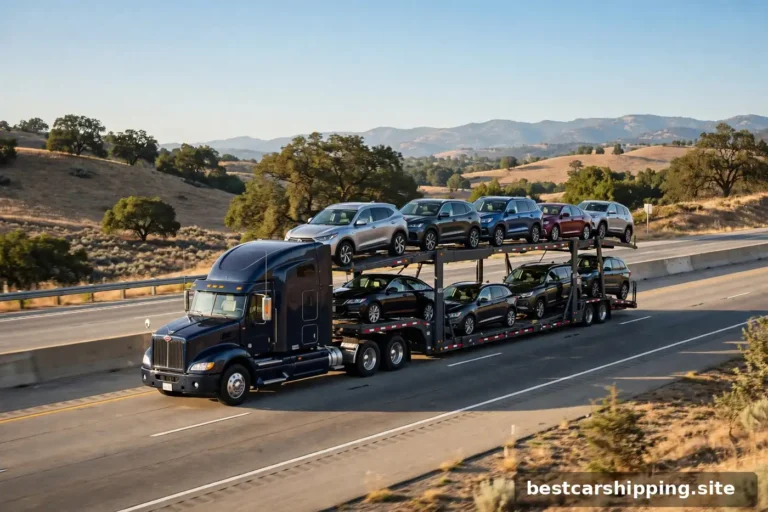
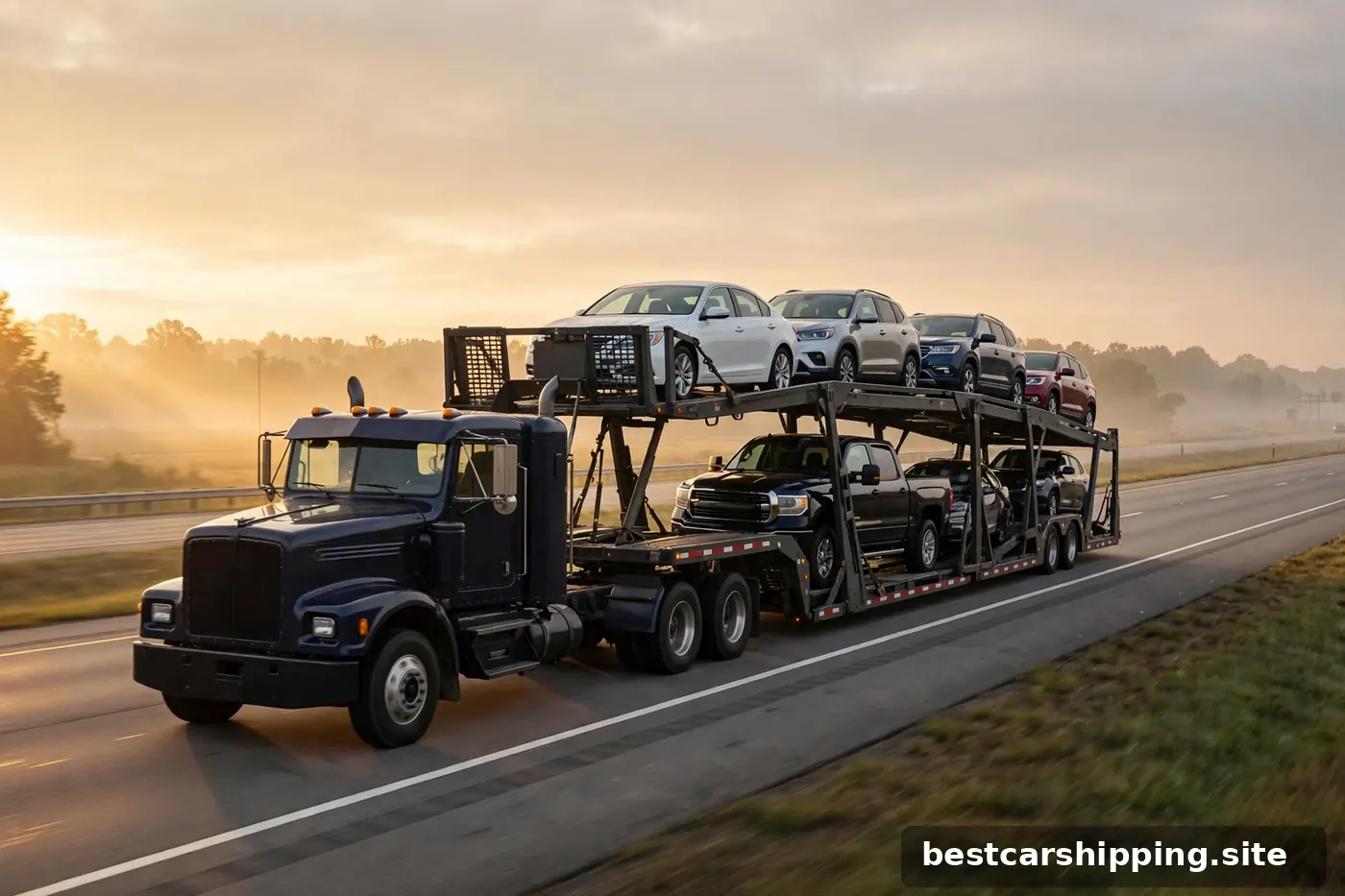
A standard open carrier holds roughly nine to ten vehicles on two decks. Every vehicle slot is priced against two constraints:
- Space. A compact sedan occupies one standard slot. A full-size SUV or crew-cab pickup with a long bed is longer and often wider, which can crowd neighboring slots or force the driver to load fewer vehicles total. Fewer vehicles per trip means the carrier needs more revenue per vehicle.
- Weight. Trailers have legal weight limits (generally 80,000 lbs gross on interstate highways, including the truck, trailer, and all cargo). A 3,300-lb sedan vs. a 6,000-lb heavy-duty truck is nearly double the weight. Multiply that across a full load and the trailer simply can’t carry as many heavy vehicles.
That’s the entire surcharge logic. The carrier isn’t punishing you for driving a truck — it’s recovering the revenue lost from the slot and weight your vehicle consumes. As CitizenShipper’s 2026 cost breakdown notes, larger vehicles like SUVs, lifted trucks, and vans are among the main factors that increase quotes, because they reduce load efficiency.
Key takeaways
- Size surcharges reflect real costs: trailer slots and legal weight limits, not arbitrary fees.
- A typical SUV or pickup adds $100–$450 over the same route’s sedan price.
- The bigger and heavier the vehicle, the higher within (or beyond) that range it lands.
SUV and truck shipping costs by distance
Start with the sedan baseline for open transport, then add the size surcharge. Baseline figures are 2026 national averages from CitizenShipper’s published cost data — actual quotes vary by route, season, and demand.
| Distance | Sedan (open) | Mid-size SUV/crossover | Full-size SUV/pickup |
|---|---|---|---|
| Under 500 mi | $400–$700 | $500–$850 | $550–$1,000 |
| 500–1,000 mi | $700–$1,000 | $800–$1,200 | $850–$1,400 |
| 1,000–1,500 mi | $800–$1,200 | $950–$1,450 | $1,000–$1,650 |
| 1,500–2,500 mi | $1,000–$1,500 | $1,150–$1,750 | $1,200–$1,950 |
| 2,500+ mi | $1,100–$1,700 | $1,250–$1,950 | $1,300–$2,150 |
A mid-size crossover (RAV4, CR-V, Equinox) usually lands at the low end of the surcharge range — often $100–$200 over sedan. A full-size body-on-frame SUV (Tahoe, Expedition, Suburban) or a crew-cab pickup (F-150, Silverado, Ram 1500) lands mid-range, roughly $200–$350. Heavy-duty diesels (F-250/350, 2500/3500 series), large vans, and anything over about 6,000 lbs push toward the top of the range and beyond.
Enclosed transport adds 30–60% on top of these figures regardless of vehicle size, so an enclosed cross-country move for a large SUV can run $1,700–$2,600+. For the full baseline picture, our master cost guide covers every distance tier in detail.
How the size surcharge breaks down
The $100–$450 range isn’t random. Where your vehicle lands depends on a few specifics:
- Curb weight. This is the single biggest driver. Carriers often price in weight bands: under 4,000 lbs (sedan/small crossover territory), 4,000–5,500 lbs (mid-size SUVs, light trucks), and 5,500+ lbs (full-size trucks, large SUVs, diesels). Crossing into a higher band is where the jump happens.
- Length. A crew-cab pickup with a 6.5-ft bed can stretch past 20 feet — over two feet longer than a standard slot. That overhang eats into the adjacent slot.
- Height. Standard clearance on the lower deck is limited. Vehicles over roughly 7 feet tall may not fit the lower deck and must go on top, which constrains how the driver loads the whole trailer. Roof racks, light bars, and roof cargo boxes add height — remove them if you can.
- Width. Wide-body trucks with towing mirrors extended can encroach on neighboring slots. Fold your mirrors in before pickup.
The quotes you receive should reflect these factors transparently. If two quotes for the same truck differ by $400 and neither company explains why, the cheaper one may be pricing your vehicle as a sedan — which means the price will “adjust” upward once the carrier actually sees it. That bait-and-switch pattern is one of the classic car shipping scams to watch for. For the full list of what drives pricing, see our breakdown of 9 car shipping cost drivers.
When a vehicle counts as oversized
Most SUVs and pickups ship on standard carriers at standard (surcharged) rates. But some vehicles cross into “oversized” territory, where normal pricing no longer applies:
- Vehicles over ~7 feet tall or ~20 feet long may not fit standard open-carrier slots at all.
- Dually trucks, box trucks, and large vans (Sprinters, Transits, commercial vans) often need specialized equipment or take the space of two vehicles — expect pricing well above the $450 surcharge range.
- Vehicles over ~7,000 lbs can trigger weight-permit issues and may need a carrier set up for heavy loads.
- Anything wider than ~84 inches with mirrors in may need a slot of its own.
Oversized vehicles sometimes ship on flatbeds or specialized trailers rather than standard auto carriers, and the market for that equipment is thinner — fewer carriers, less competition, higher prices. If your vehicle is oversized, get quotes from companies that explicitly handle oversized loads, and be wary of standard-carrier quotes that seem too cheap; they may not have equipment that can actually load your vehicle.

Lifted, lowered, and modified vehicles
Modifications change the math and must be disclosed when you get quotes:
- Lifted trucks gain height and often width (oversized tires). A moderate lift on a truck that was already tall can push it out of standard-deck clearance. Disclose the lift height and tire size.
- Lowered vehicles face the opposite problem: reduced ground clearance makes ramp loading risky. Standard carrier ramps have a fixed angle, and a car sitting inches off the ground can scrape or get stuck. Some carriers use extended ramps or liftgates — but you have to tell them in advance.
- Roof racks, light bars, bull bars, and spare tire carriers add length, height, or both. Remove what you can; disclose what you can’t.
- Aftermarket body kits and spoilers are damage-prone during strapping. Photograph them thoroughly and make sure they’re noted on the Bill of Lading.
The disclosure rule is simple: anything that changes your vehicle’s stock dimensions, ground clearance, or weight should be in the quote request. Surprises at pickup turn into price increases or refused loads. As Move.org advises in their cheapest-way-to-ship guide, preparing the vehicle properly and being upfront avoids the fees and delays that come from surprises.
Key takeaways
- Disclose every modification that changes stock dimensions, clearance, or weight — lift height, tire size, racks, lowering.
- Lowered vehicles may need extended ramps; lifted trucks may not fit standard decks.
- Undisclosed modifications are a top cause of pickup-day price increases.
How to keep the surcharge down
You can’t make your truck smaller, but you can control everything else:
- Ship open transport. Enclosed adds 30–60% on top of an already-surcharged price. Open is the standard for a reason — it’s how dealers move millions of vehicles. Our open vs enclosed comparison covers when each makes sense.
- Book at least two weeks ahead. More lead time means more carriers competing for your load, which matters more for heavy vehicles since fewer carriers can take them.
- Be flexible on pickup dates. A carrier with room on a trailer passing through your area is your cheapest option — rigid dates cost more.
- Strip the accessories. Roof boxes, bike racks, and bed-mounted cargo add height and length. Removing them can drop you into a lower size band.
- Keep the fuel tank at a quarter. A full tank on a 30-gallon truck is ~180 extra pounds of dead weight. Carriers notice.
- Meet near a highway. If you’re rural, offering to meet the driver at a truck-accessible location near an interstate can shave $150–$300 off rural-access fees.
Key takeaways
- Open transport, early booking, flexible dates, and stripped accessories are your main levers.
- Rural pickup adds $150–$300 — meeting near an interstate can erase it.
- Quotes that price your truck like a sedan will “adjust” upward later; honest sizing upfront saves the headache.
FAQ
How much more does it cost to ship an SUV vs a sedan?
Typically $100–$450 more on the same route, depending on the SUV’s size and weight. A compact crossover adds roughly $100–$200; a full-size SUV like a Tahoe or Expedition adds $200–$350.
Why does shipping a pickup truck cost more than a car?
Pickups are longer, wider, and heavier than sedans, consuming more trailer space and weight capacity. A carrier that fits ten sedans may only fit eight full-size trucks — the per-vehicle price rises to cover the lost capacity.
Can a lifted truck be shipped on a normal car carrier?
Sometimes, but not always. Standard carriers have height limits around 7 feet for deck clearance. A moderately lifted truck may still fit; a heavily lifted rig with oversized tires may need a specialized carrier. Disclose the lift height and tire size when getting quotes so the right equipment shows up.
Does a dually or heavy-duty diesel cost more to ship?
Yes — usually well above the standard $100–$450 surcharge. Duallys are wide enough to crowd neighboring slots, and heavy-duty diesels can exceed 7,000 lbs, limiting which trailers can legally carry them. Expect quotes reflecting the specialized handling.
Do I need enclosed transport for my SUV?
Almost never for a daily-driver SUV or truck. Enclosed transport is for high-value, classic, or exotic vehicles where protection from weather and debris justifies a 30–60% premium. Open transport moves millions of SUVs and trucks safely every year.
Should I remove my roof rack before shipping?
Yes if you can. Roof racks and cargo boxes add height that can push a tall SUV over deck-clearance limits and add to the size surcharge. At minimum, disclose them in your quote request.
Sources: distance-tier pricing from CitizenShipper’s 2026 cost breakdown; booking and prep strategies from Move.org’s cheapest-way guide.