Holiday Season Car Shipping: Timing Tips
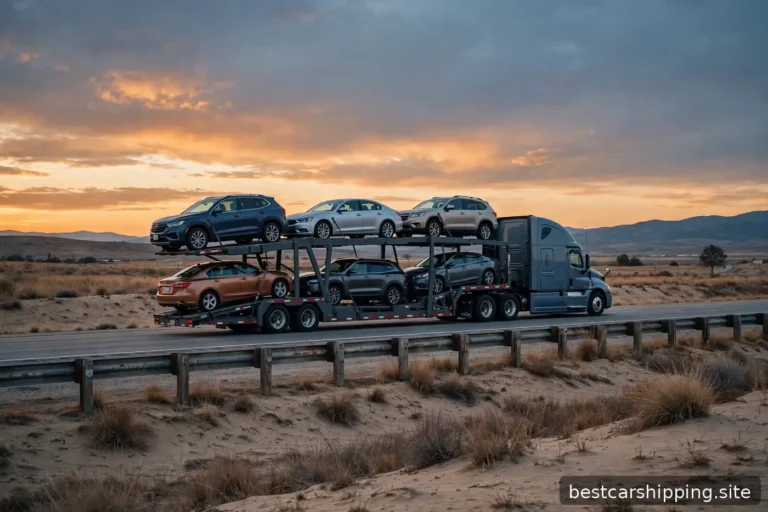
The holidays are the trickiest shipping season: carrier capacity thins as drivers take time off, winter weather closes in on northern routes, and everyone wants their car before the holiday — not after. The fix: book 3–4 weeks early, avoid Thanksgiving and Christmas weeks if you can, and build buffer days into every plan.
Key takeaways
- Book 3–4 weeks ahead for any shipment touching Thanksgiving, Christmas, or New Year’s.
- Thanksgiving week and Christmas week have the thinnest capacity and highest weather risk — ship the week before instead.
- Delivery dates are estimates; never make holiday travel depend on the car arriving on a specific day.
- Winterize the car (antifreeze, battery, tires) and photograph everything before pickup.
- Terminal shipping can be a smart backup when door-to-door windows slip.
Why the Holidays Crunch Car Shipping
Three forces collide in late November and December:
- Drivers take time off. Owner-operators and company drivers want Thanksgiving and Christmas at home like everyone else. Fewer trucks running means less capacity chasing the same (or greater) demand.
- Demand doesn’t drop. People ship cars to be at the holidays — students’ cars going home, gifts (yes, people ship cars as gifts), relocations timed to year-end, and snowbirds still moving south into December.
- Winter weather hits northern routes. Snow, ice, and storms slow trucks, close passes, and force reroutes. A storm that delays a truck by two days in Ohio ripples through the whole week’s schedule.
The result: the standard 1–5 day pickup window stretches, guaranteed-date service (where offered) commands a real premium, and last-minute holiday bookings either cost significantly more or simply don’t find a truck. None of this is a reason to panic — it’s a reason to plan. Our car shipping timeline guide covers normal pickup windows and transit times; treat holiday timelines as that guide’s pessimistic case.
The Booking Calendar: Work Backwards
Start from the date the car must arrive, then work backwards — and add buffer. Here’s how:
For Thanksgiving (fourth Thursday of November):
- Want the car by the Tuesday before Thanksgiving? Book by late October / first week of November at the latest.
- Transit time is typically 1–7 days depending on distance (longer for cross-country), plus a 1–5 day pickup window — longer in holiday season. That means “booked November 1st” can easily mean “delivered November 20th” on a long route.
- Better move: ship the first week of November for pre-Thanksgiving arrival, or wait until the week after Thanksgiving when capacity normalizes.
For Christmas / New Year’s:
- Want the car by December 23rd? Book by late November / first week of December.
- The December 23–January 2 stretch is effectively a shipping dead zone: minimal pickups, skeleton crews, maximum weather risk. Anything that must move then should be booked as expedited — and even expedited can’t beat a blizzard.
- Better move: target delivery by December 18–20, or push to the first full week of January when the network resets.
The golden rule: add 3–5 buffer days beyond the broker’s estimate for any holiday-adjacent shipment. If the estimate says “delivery December 20–22” and you need it by the 23rd, you’re gambling. Estimates are honest averages, not promises — and holiday averages have fat tails.
Weather Delays: Plan for Them
Winter weather is the wildcard you can’t negotiate with. Practical ways to handle it:
- Northern pickup/delivery addresses are the risk points. A Florida-to-Arizona shipment in December barely notices winter; a Chicago-to-Boston one lives with it. Know which end of your route carries the risk.
- Mountain passes deserve respect. I-70 through Colorado, I-80 through Wyoming, Snoqualmie Pass in Washington — carriers know these routes and will delay or reroute rather than risk a loaded trailer. That’s professionalism, not failure.
- Ask about the weather contingency. A good broker will tell you honestly when a storm is affecting your lane. A bad one goes silent. Responsiveness during delays is one of the clearest quality signals in this business.
- Enclosed transport doesn’t beat weather. It protects the car from road salt and slush (nice in winter), but an enclosed trailer is stuck behind the same snowplow as everyone else. Don’t pay the premium expecting faster transit.
- Keep the car’s emergency kit. If you’re driving to meet the truck at a pickup point in winter, the usual: charged phone, warm clothes, and realistic expectations about rural meeting spots in a storm.
One thing worth knowing: carriers’ cargo insurance covers damage during transport, not delays. If a storm parks your car at a terminal for three days, that’s frustrating but not compensable — which is why the buffer days matter more than the fine print.
Pickup and Delivery Around the Holidays
Holiday logistics have quirks beyond weather:
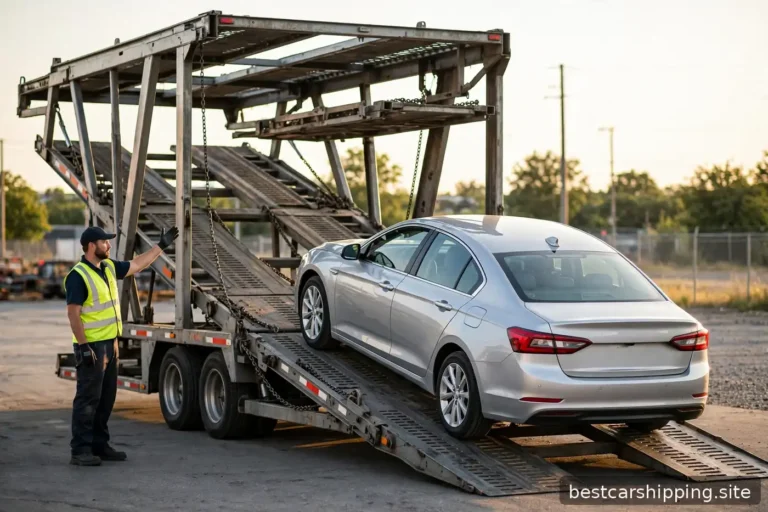
- Someone has to be there. Pickup and delivery both require an adult to inspect the car and sign the Bill of Lading. If you’re traveling, designate someone and brief them — a rushed holiday handoff is exactly when inspection corners get cut. Never sign without the full walk-around, no matter how festive the driveway.
- Daylight is scarce. Late-November and December pickups often happen in dim light. Do the inspection with a flashlight or phone light, and photograph everything — damage found later without pickup documentation is nearly impossible to claim.
- Terminal shipping as a backup. If door-to-door pickup windows keep slipping around the holidays, terminal-to-terminal can be more predictable: you drop the car when it suits you, and the carrier moves it on the next available truck. Less convenient, but it decouples your schedule from the truck’s. See door-to-door vs terminal shipping for the trade-offs.
- Confirm the driver’s holiday schedule. Ask directly: “Will this truck be running through Thanksgiving week?” A carrier that planned a holiday shutdown mid-route is a carrier that should have told you before you booked.
- Payment readiness. The balance is due to the driver at delivery — cash, cashier’s check, or payment app. Over the holidays, banks have limited hours; don’t plan to get a cashier’s check on Christmas Eve morning.

Winter Prep Before the Truck Arrives
Standard car prep applies year-round, with winter additions:
- Antifreeze rated for the route. If the car is heading into or through sub-freezing territory, confirm the coolant is rated for it. This matters most for cars that lived in warm climates.
- Battery health. Cold kills weak batteries, and a car that won’t start at delivery becomes an inoperable-vehicle problem (~$150 winch fee, plus hassle). If the battery is old, replace it before shipping, not after.
- Tire pressure. Cold drops PSI; properly inflated tires load and unload cleanly.
- Washer fluid. Winter-grade, full reservoir — the driver and the next owner will thank you.
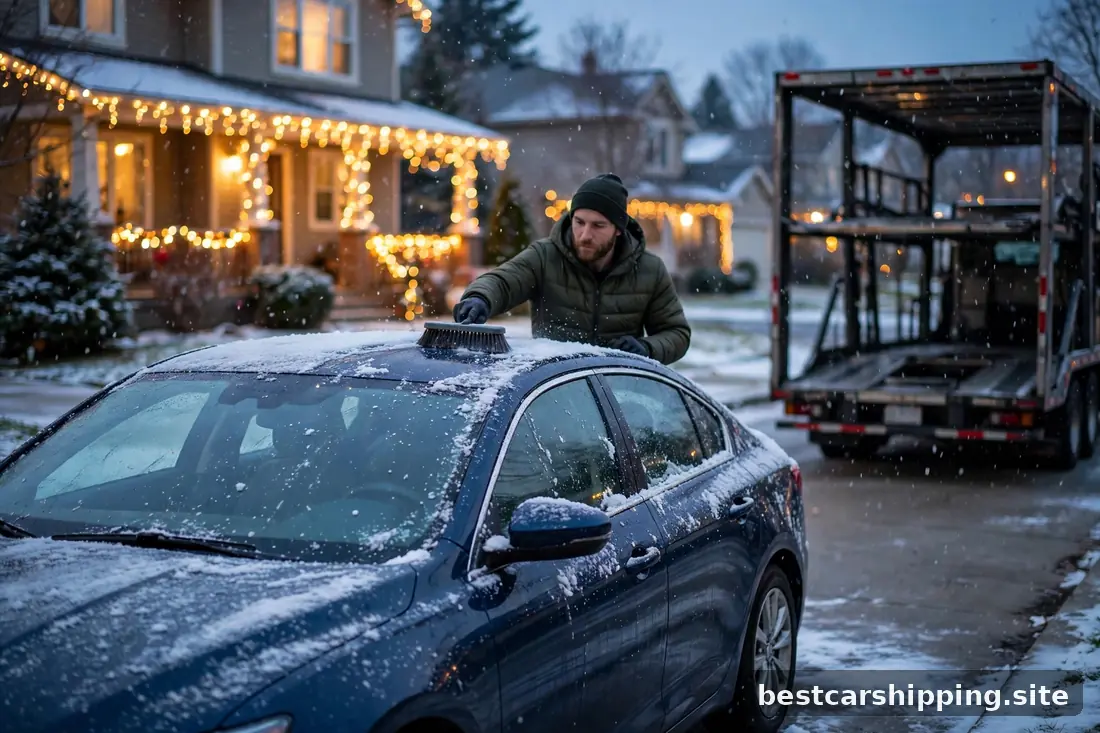
- Clear snow and ice before pickup. The driver needs to inspect the car, and you need photos of actual paint, not snowpack. Brush it off fully.
- Remove the extras. Ski racks, bike racks, roof boxes — anything that adds height, catches wind, or isn’t bolted down comes off. Winter gear goes in a shipped box, not on the roof.
- A quarter tank of fuel. Standard advice, winter edition: enough to drive off the trailer and reach a gas station, not so much that it’s dead weight.
What It Costs
Holiday pricing follows the same 2026 bands as the rest of the year — $400–$700 for short hauls up to $1,100–$1,700 coast-to-coast open transport, enclosed adding 30–60% (2026 national averages) — with two holiday-specific modifiers:
- Firm-date premiums. If you need pickup or delivery on a specific date around the holidays (rather than a window), expedited/guaranteed service is the only honest way to get it, and it costs meaningfully more. Get the expedited quote in writing and compare it against the standard-window price so you know what the date-certainty costs.
- Last-minute surcharges. Booking inside of a week during the holidays means the broker must bid aggressively to attract a carrier fast. The urgency premium is real — which is simply the 3–4 week rule restated as money.
The cheapest holiday shipment is the one booked early with a flexible window. The most expensive is the one booked December 20th for “must arrive by Christmas.” Plan accordingly.
A note on shipping cars as gifts. It happens every December — a car bought for a spouse, a graduate, a parent. If that’s your plan, add one more layer of secrecy logistics: the broker and driver will call the numbers you give them, so use your own number (not the recipient’s) for all coordination, and arrange delivery for a day you can intercept the truck. Nothing ruins the surprise like a carrier calling the recipient to confirm the delivery window. Also confirm title and registration paperwork is handled separately — the truck delivers the car, not the legal transfer.
FAQ
How far in advance should I book holiday car shipping?
Three to four weeks minimum for any shipment touching Thanksgiving, Christmas, or New Year’s week. For guaranteed dates, book even earlier — holiday capacity is thin and weather delays are common.
Is it more expensive to ship a car during the holidays?
The base rates follow normal 2026 bands, but firm-date requirements (expedited service) and last-minute bookings cost meaningfully more. Booking early with a flexible pickup window keeps you near standard pricing.
Should I avoid shipping during Thanksgiving week or Christmas week?
If you can, yes — ship the week before instead. Both weeks have the year’s thinnest carrier capacity and highest weather risk. The weeks immediately after each holiday normalize quickly.
What if winter weather delays my car’s delivery?
Delays from storms are normal and not compensable under cargo insurance — which is why you build 3–5 buffer days into holiday plans and never make holiday travel depend on a specific delivery day. A responsive broker who communicates during delays is worth their weight.
Does enclosed transport help with winter shipping?
It protects against road salt, slush, and debris — genuinely useful in winter — but it doesn’t move faster through weather. Choose enclosed for protection, not speed.