What Affects Your Car Shipping Price? 9 Cost Drivers
Two people can ship the same car the same week and pay wildly different prices. That’s because car shipping isn’t priced like a parcel — it’s priced like freight, and nine distinct cost drivers decide your number. Understand them and you can predict your quote, spot a bad one, and pull the levers that actually lower the price.
Key takeaways
- Distance is the biggest driver, but cost per mile falls as distance rises — short hauls are the priciest per mile.
- Vehicle size, route demand, and season each swing quotes by hundreds of dollars.
- Flexibility is free money: a 3–5 day pickup window and 2+ weeks of lead time lower prices.
- Enclosed transport adds 30–60%; inoperable vehicles add ~$150; rural locations add $150–$300.
- No single driver decides your price — quotes reflect how all nine stack up on your route.
1. Distance
Distance is the single largest component of your quote — but the relationship isn’t linear. A 2,500-mile shipment doesn’t cost five times a 500-mile one. It costs roughly two to three times as much, because the carrier’s fixed costs (loading, inspections, scheduling, driving to and from the highway at both ends) get spread over more miles.
That’s why per-mile rates fall with distance. Using 2026 national averages for open transport of a standard sedan (CitizenShipper’s 2026 cost data):
| Distance | Typical open cost | Approx. per mile |
|---|---|---|
| Under 500 miles | $400–$700 | $1.00–$2.00 |
| 500–1,000 miles | $700–$1,000 | $0.75–$1.25 |
| 1,000–1,500 miles | $800–$1,200 | $0.60–$1.00 |
| 1,500–2,500 miles | $1,000–$1,500 | $0.45–$0.80 |
| Coast-to-coast (2,500+) | $1,100–$1,700 | $0.45–$0.70 |
Practical takeaway: never compare quotes on per-mile price alone. A $1.80/mile quote on a 300-mile hop can be perfectly fair while a $0.55/mile coast-to-coast quote is the better deal in absolute terms. Compare totals for your actual route.
2. Vehicle Size and Weight
Carriers sell trailer space and weight capacity, not just “a car.” A compact sedan is the cheapest thing to ship because it fits standard dimensions and lets the carrier maximize the load. Everything bigger costs more:
- SUVs, pickup trucks, and vans: typically $100–$450 more than a comparable sedan, because they take more deck space and add weight (which burns more fuel).
- Large trucks and oversized vehicles: lifted trucks, duallys, and extended-cab long-beds can cost substantially more — they may take the space of 1.5 vehicles.
- Modifications: oversized tires, roof racks, lift kits, and lowered suspensions can trigger surcharges for special handling or equipment.
- Electric vehicles: battery packs make EVs substantially heavier than comparable gas cars. Our EV shipping guide covers battery rules, charge-level requirements, and the typical surcharge.
When you request quotes, give the exact year, make, model, and trim — and disclose modifications. A quote based on “Ford F-150” that shows up to a lifted F-250 on 37s is how pickup-day price increases happen. Our SUV and truck shipping cost guide breaks down size surcharges in detail.
3. Route Popularity
Carriers make money when their trailers are full in both directions. Routes between major metros — Los Angeles to Dallas, Miami to New York, Chicago to Atlanta — have constant vehicle flow, lots of competing carriers, and backhaul loads. That competition keeps prices down.
The flip side: shipping from a small town in Montana to rural Maine means the driver deadheads (drives empty) to reach you, with little chance of a paying load nearby. Expect $150–$300 more for rural or remote pickup and delivery versus metro-to-metro.
You can sometimes blunt this by meeting the driver at a highway-accessible location — a truck stop or large parking lot near the interstate. It saves the driver an hour of navigating residential streets, and some brokers will price that in. What’s genuinely rural versus just “off the highway” is a judgment call; ask the broker how they classified your addresses.
4. Season and Timing
Auto transport has seasons, and they move prices by 10–25%:
- Summer (June–August): Peak season. Families relocating, college moves, dealer inventory shifts — demand surges and so do prices. This is the most expensive time to ship.
- Snowbird season (October–December southbound, March–May northbound): Routes between northern states and Florida/Arizona spike as seasonal migrants move cars. Southbound fall routes in particular get expensive.
- Spring and fall shoulders: Generally the most balanced pricing and best availability.
- Winter (excluding holidays): Often the cheapest for non-snowbird routes, though weather delays are the trade-off.
Holidays create their own mini-peaks: Thanksgiving and Christmas weeks see tight capacity and weather risk. If your dates are flexible, shifting even a week away from a holiday can change the quote meaningfully.
5. Fuel Prices
Carriers run on diesel, and a fully loaded 80,000-pound rig burns a lot of it. When diesel prices spike, carriers raise rates — usually with a lag of a few weeks, and rarely as a separate line item on your quote. It’s baked into the number.
You can’t control fuel prices, but you should know they exist as a driver so you don’t misread the market. If quotes across the board are 10% higher than a pricing guide from six months ago and diesel is up, that’s the market talking — not a broker padding the quote. Conversely, “fuel surcharge” appearing as a surprise add-on after booking is a red flag; fuel belongs in the quoted price.
6. Operability
A car that starts, steers, and brakes loads under its own power in minutes. A car that doesn’t needs a winch, extra crew time, and sometimes special equipment. The standard surcharge for an inoperable vehicle is around $150 — and that’s for cars that roll and steer. Vehicles that don’t roll (seized brakes, missing wheels) may need a forklift and cost considerably more.
Disclose non-running condition upfront, every time. A carrier that arrives expecting a runner and finds a dead car may refuse the load entirely — and you’ll pay a dry-run or rescheduling fee for the trouble. If the car runs but has quirks (weak battery, sticky parking brake), mention those too.

7. Timing Flexibility
This is the cost driver most people underestimate, and the one you control most directly. Carriers build routes like puzzles — your car is one piece. The more flexible the piece, the cheaper it fits:
- Pickup window: A 3–5 day window lets the dispatcher slot you into an efficient route. A “must pick up Tuesday between 9 and 11” demand forces expedited handling and costs more.
- Lead time: Booking two or more weeks ahead consistently gets better pricing than last-minute booking. Last-minute means the broker has to bid aggressively to attract a carrier fast — and you pay for that urgency.
- Delivery flexibility: Same logic at the other end. If someone can receive the car across a few days, the driver can sequence the route efficiently.
Expedited shipping exists and works, but treat it as the premium product it is. If your timeline is genuinely fixed, get the expedited quote in writing and compare it against the standard-window price so you know exactly what the urgency costs.
8. Open vs Enclosed Transport
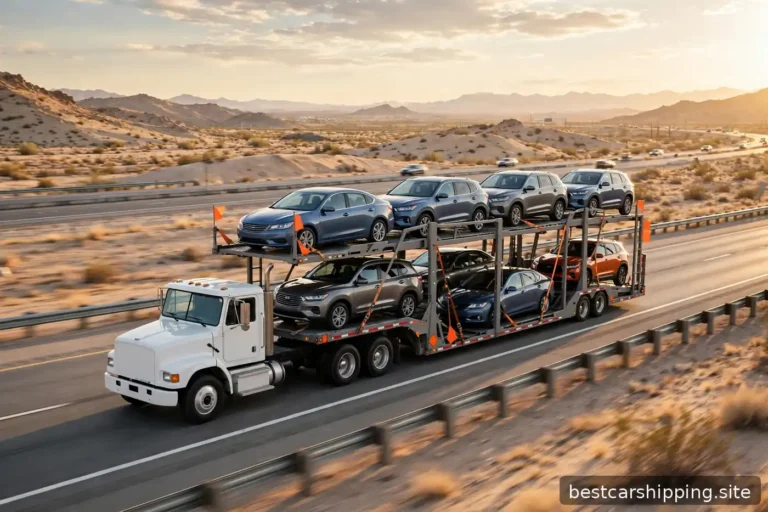
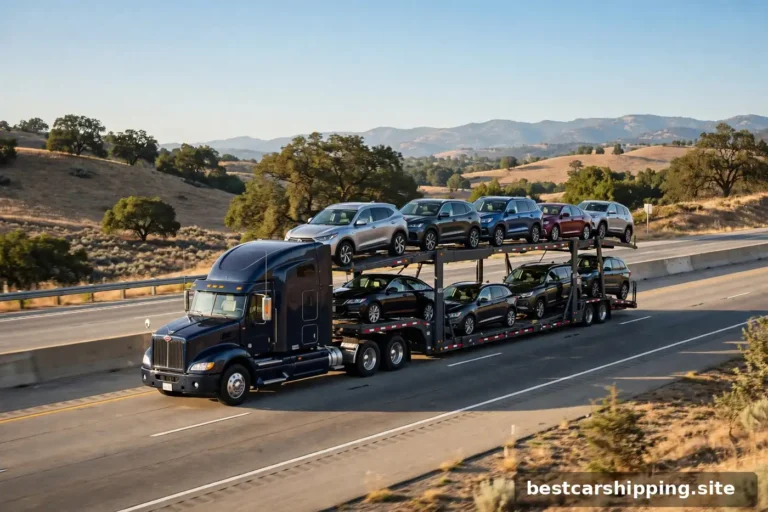
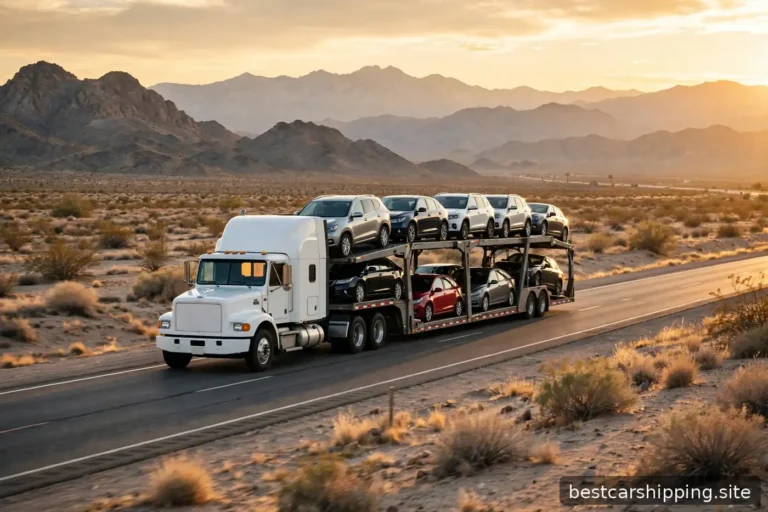
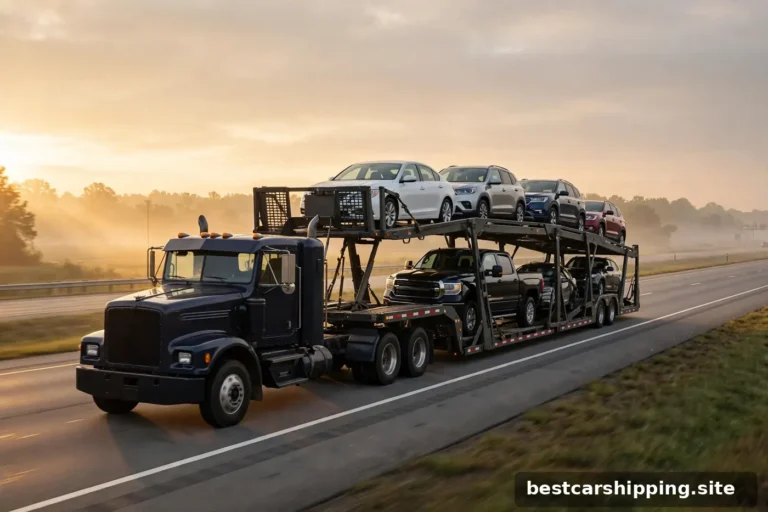
The trailer you choose is a straightforward multiplier: enclosed transport costs roughly 30–60% more than open on the same route. Enclosed trailers carry fewer vehicles (2–7 vs 7–10), offer protection from weather and road debris, and often come with lift gates for low-clearance cars.
Open transport is the industry standard — it’s how new cars reach dealerships — and it’s perfectly safe for the vast majority of vehicles. Enclosed is the right call for classics, exotics, luxury cars, and anything where a paint chip would be a four-figure repair. Our open vs enclosed comparison walks through who actually needs which.
Don’t pay for enclosed out of vague anxiety; do pay for it when the car’s value justifies the premium. That’s the whole decision in one sentence.
9. Pickup and Delivery Method
Door-to-door is the default quote you’ll receive: the carrier picks up and delivers as close to your addresses as the truck can legally and safely get. (Note: “door-to-door” really means “nearest safe truck access” — an 80-foot rig can’t do your cul-de-sac, so expect a nearby meeting point if your street is tight.)
Terminal-to-terminal — you drop the car at a regional terminal and collect it at the destination terminal — is cheaper because the driver skips residential detours. The savings are real but modest, and you trade convenience: getting yourself to and from terminals, plus potential daily storage fees if you can’t collect promptly.
For most people, door-to-door is worth it. Terminal shipping makes sense when you’re near major terminals, your schedule is flexible, and every dollar counts.
How the Drivers Interact
No quote is set by one factor. A short quote in July for a lifted truck from a rural town to another rural town stacks four expensive drivers (short distance = high per-mile, peak season, oversize, rural) — that’s how a 400-mile shipment can cost nearly as much as a 1,200-mile metro-to-metro sedan move in February.
Use this to your advantage when comparing quotes. If one quote is 30% lower than the others on the same route and dates, something’s off — it’s either missing a driver (they quoted a sedan price for your SUV), or it’s a teaser quote that will grow at pickup. Legitimate quotes on identical details cluster together. For the full picture on what shipping should cost, see our 2026 car shipping cost guide.
FAQ
What’s the biggest factor in car shipping cost?
Distance — it sets the base price. But per-mile cost falls as distance rises, so the other eight drivers (vehicle size, route, season, fuel, operability, flexibility, trailer type, pickup method) decide where inside the range your quote lands.
Why is shipping a car a short distance so expensive per mile?
Fixed costs — loading, inspections, scheduling, and driving to and from the highway — are the same whether the trip is 200 or 2,000 miles. On short hauls those fixed costs dominate, pushing per-mile rates to $1.00–$2.00.
Does the time of year really change the price?
Yes, by roughly 10–25%. Summer is peak (most expensive), snowbird migration spikes Florida/Arizona routes in fall and spring, and winter is often cheapest for non-snowbird lanes — with weather delays as the trade-off.
Will my quote change if diesel prices change?
Carriers bake fuel into the quoted price, so your locked quote shouldn’t move with fuel prices. If a “fuel surcharge” appears after booking that wasn’t in the quote, treat it as a red flag.
How much can flexibility save me?
Meaningfully. A 3–5 day pickup window versus a fixed date, and booking 2+ weeks ahead versus last-minute, can each shift your quote by 10–20%. Flexibility is the cheapest discount in car shipping.