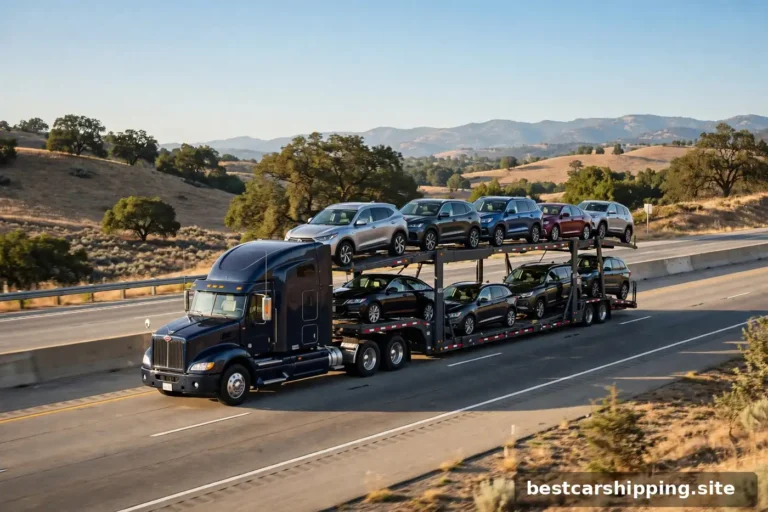
Car Shipping Costs This Fall: What’s Changed in 2026
Fall is the car shipping market catching its breath. Summer’s peak-season surge fades through September, and most routes settle into steadier shoulder-season pricing. But fall 2026 has a wrinkle: snowbird demand on southbound routes to Florida and Arizona starts building in October. Here’s what that means for your quote.
Key takeaways
- Fall 2026 opens with 2026’s established price bands: $400–$700 (<500 mi) up to $1,100–$1,700 coast-to-coast open transport.
- September–early October is typically the year’s best pricing window on non-snowbird routes as summer demand fades.
- Southbound snowbird lanes (North → Florida/Arizona) tighten from October — book those early.
- Holiday weeks (Thanksgiving, Christmas) create mini-peaks with tight capacity and weather risk.
- Two-plus weeks of lead time and a flexible pickup window still beat every other discount.

Where Prices Stand Heading Into Fall 2026
The 2026 national price bands are well established at this point, verified across multiple industry pricing guides this year. For open transport of a standard sedan, door-to-door:
| Distance | Typical open range |
|---|---|
| Under 500 miles | $400–$700 |
| 500–1,000 miles | $700–$1,000 |
| 1,000–1,500 miles | $800–$1,200 |
| 1,500–2,500 miles | $1,000–$1,500 |
| Coast-to-coast (2,500+) | $1,100–$1,700 |
Enclosed transport adds roughly 30–60% on top; SUVs and trucks run about $100–$450 more than sedans; inoperable vehicles add ~$150; rural pickup or delivery adds $150–$300. Those bands come from CitizenShipper’s 2026 cost data, and they line up with what other 2026 guides publish.
What’s changed versus summer: the direction of pressure. Summer quotes skew toward the top of those bands on busy lanes because carriers can pick the best-paying loads. As demand cools in September, quotes drift back toward the middle of the bands on most routes. Nothing dramatic — car shipping doesn’t crash 30% in a month — but the difference between a July quote and a late-September quote on the same lane is often $100–$200 in your favor.
For the full year-round breakdown, our 2026 car shipping cost guide has the complete tables.
The Shoulder-Season Effect
Spring and fall are the industry’s shoulder seasons: demand is moderate, carrier capacity is available, and dispatchers can build efficient full trailers without bidding wars. That shows up in three practical ways:
- Faster carrier assignment. The standard 1–5 day pickup window actually means 1–5 days in the shoulder season. In summer it can stretch; in fall it usually doesn’t.
- Less quote dispersion. When capacity is tight, quotes scatter — some brokers lowball to win the booking, others price in the risk. Shoulder-season quotes from legitimate brokers tend to cluster, which makes comparing them easier and bait-and-switch less common.
- Negotiating room. With trucks to fill, carriers are more willing to take a fairly priced load. A polite counter-offer $50–$100 under the quote has a better chance of landing in October than it did in July.
The shoulder season isn’t uniform, though. College-town routes stay busy through September as students settle in, and hurricane season (through November) can disrupt Gulf Coast and Florida lanes with little warning. If you’re shipping to or from Florida in fall, build weather contingency into your timeline regardless of price.
The Snowbird Exception
Here’s the wrinkle: while most of the country enjoys shoulder-season pricing, one set of lanes moves the other direction. Starting in October, seasonal migrants — snowbirds — begin moving cars from northern states to Florida and Arizona for the winter. That southbound demand builds through November and December, and it pushes rates up on those specific lanes even as the rest of the market softens.
What this looks like in practice:
- North → Florida / Arizona (Oct–Dec): Demand rises, capacity tightens, prices climb above shoulder-season norms. The earlier you book, the better — September booking for a November shipment beats November booking for a November shipment by a wide margin.
- Florida / Arizona → North (Oct–Dec): The reverse lane goes quiet. Carriers need backhaul loads heading north, so northbound quotes in late fall can be genuinely cheap. If your route happens to run against the snowbird flow, fall is your discount season.
- The pattern flips in spring (March–May), when everyone heads back north.
If you’re a snowbird yourself, don’t wait for “fall” to start thinking about this — our snowbird car shipping guide covers the booking window in detail. The short version: the September/October booking window is real, and the people who book then pay less than the people who scramble in November.
What to Book Now vs What Can Wait
Book now (September–early October):
- Any southbound snowbird shipment for October–December delivery. This is the single most time-sensitive fall booking.
- Holiday-adjacent shipments. If the car needs to arrive before Thanksgiving or Christmas, book 3–4 weeks out — carrier capacity around the holidays is thin and weather delays are common.
- Enclosed transport on any lane. Enclosed carriers are scarcer than open carriers year-round; fall doesn’t change that.
Can wait a few weeks:
- Standard metro-to-metro open shipments with flexible dates. Shoulder-season capacity is good, and quotes are stable.
- Northbound shipments from Florida/Arizona in late fall — the backhaul dynamic favors you, and waiting doesn’t hurt.
Watch the calendar:
- Thanksgiving week and the Christmas–New Year stretch are effectively blackout-adjacent: expect limited pickup availability, premium pricing for guaranteed dates, and winter weather risk on northern routes. If you can ship the week before Thanksgiving rather than the week of it, do.
How to Get a Fair Fall Quote
The quote process doesn’t change with the season, but fall gives you leverage — use it:
- Get three quotes on identical details. Same addresses, same dates, same vehicle, same transport type. Fall quotes should cluster; an outlier 30% below the rest is a teaser, not a deal.
- Ask for the all-in total in writing. No “plus fuel surcharge later,” no pickup-day surprises. Our price drivers guide lists every legitimate fee so you can check the itemization.
- Offer a 3–5 day pickup window. In the shoulder season, flexibility converts directly to dollars — dispatchers can fit you into efficient routes instead of expedited ones.
- Book 2+ weeks out. The lead-time discount is real year-round and especially easy to capture in fall when capacity is available.
- Verify before you pay. FMCSA authority check (MC/USDOT), insurance certificate, and the $0-upfront payment standard — the same protections as always. Fall’s calmer market doesn’t mean the scammers took the season off.
Fall Shipping Checklist: Before You Book
A quick pre-booking checklist tailored to fall’s specific conditions:
- Confirm which season your lane is in. Most lanes: shoulder season, book 2+ weeks out with a flexible window. Southbound snowbird lanes (North → Florida/Arizona) for October–December: peak demand building, book 4–6 weeks out. Northbound from Florida/Arizona in late fall: backhaul discounts, no rush.
- Check the hurricane calendar. Atlantic hurricane season runs through November. If you’re shipping to or from Florida or the Gulf Coast in fall, ask the broker about their weather contingency — and never schedule pickup or delivery for the exact day a storm is forecast to make landfall. Carriers will delay rather than drive into it, and that’s the right call.
- Photograph in good light. Fall means shorter days. If your pickup is scheduled for late afternoon, the inspection might happen in dim light — do your own photo documentation earlier in the day so you have clean, well-lit evidence regardless of when the truck arrives.
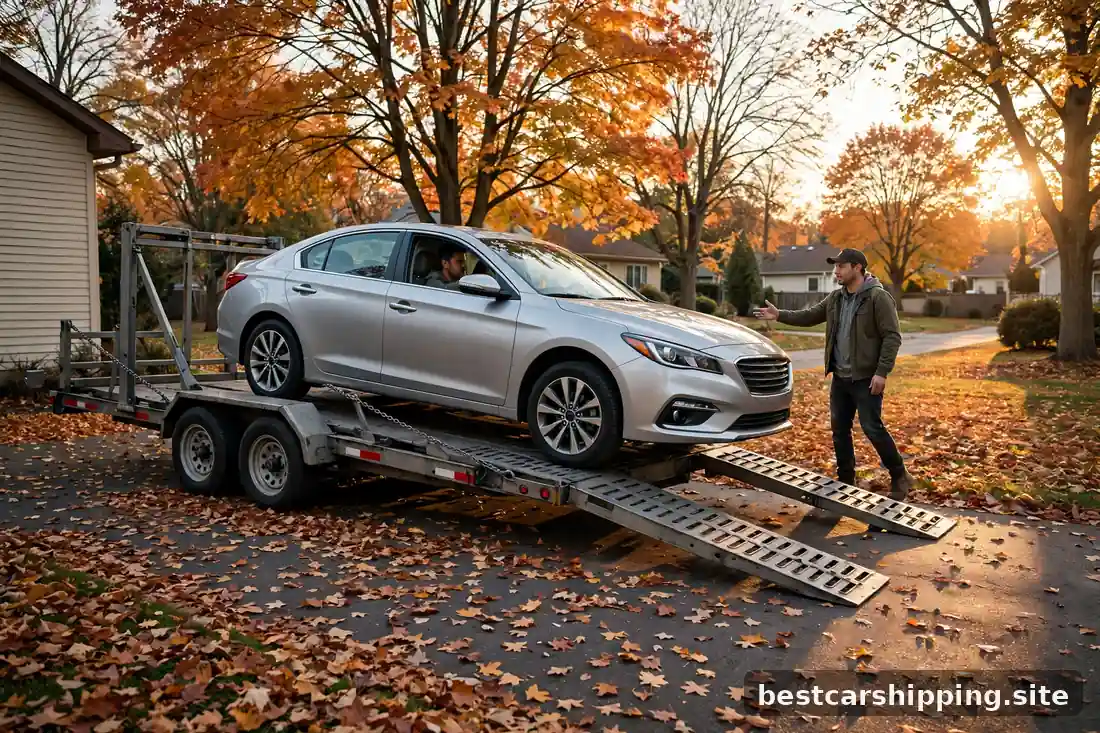
- Mind the leaves (seriously). It sounds trivial, but a car covered in wet autumn leaves hides scratches and makes the driver’s inspection harder. A quick wash before pickup is standard advice year-round; in fall it’s doing double duty.
- Winterize if the car is heading north. Shipping a car from Florida to Chicago in November? It’ll arrive to freezing temperatures. Confirm antifreeze strength, tire pressure, and battery health before it leaves the warm climate — not after it arrives in the cold.
- Keep the quote paperwork together. Fall’s calmer market means less bait-and-switch, but the defense is the same: written all-in quote, itemized fees, cancellation terms confirmed before any deposit. File the quote, the order confirmation, and the Bill of Lading photos in one place.
Fall rewards planners more than any other season. Summer punishes everyone equally with high demand; winter punishes with weather. Fall mostly punishes procrastinators — the people who meant to book the snowbird shipment in September and are now competing for November trucks. Don’t be them.
FAQ
Is fall a good time to ship a car?
Generally yes — September through early October is one of the year’s best pricing windows on most routes, as summer peak demand fades and before holiday crunches. The exception is southbound snowbird lanes (North → Florida/Arizona), which tighten from October.
How much can I save shipping in fall versus summer?
There’s no fixed discount, but the same lane often quotes $100–$200 lower in late September than in July, as quotes drift from the top of the seasonal band toward the middle. Your savings depend on route, vehicle, and flexibility.
When should snowbirds book car shipping for winter?
September to early October for October–December southbound shipments. Waiting until November means competing with peak snowbird demand on the same lanes. See our snowbird guide for the full timeline.
Do car shipping prices go up around Thanksgiving and Christmas?
Yes — holiday weeks bring tight carrier capacity, premium pricing for firm dates, and winter weather delays on northern routes. Book 3–4 weeks ahead for holiday-adjacent shipments, or ship the week before the holiday instead.
Are the 2026 price ranges in this article still accurate?
They reflect 2026 national averages published across industry pricing guides this year: $400–$700 for short hauls up to $1,100–$1,700 coast-to-coast open transport, with enclosed adding 30–60%. Your quote will vary by route, season, and vehicle — treat ranges as planning bands, not promises.