Car Shipping Broker vs Carrier: What’s the Difference?
# Car Shipping Broker vs Carrier: What’s the Difference?
A carrier owns trucks and physically moves your car. A broker owns no trucks — they take your order, find a carrier with room on your route, and coordinate the shipment. Most of the auto transport companies you’ll find online are brokers, and that’s not a bad thing. The problems start when a company won’t tell you which one it is.
Key takeaways
- Carriers own the trucks; brokers arrange shipments through a network of carriers.
- Most companies you find online are brokers — legitimacy depends on honesty and FMCSA authority, not the label.
- Brokers need broker operating authority (MC number); carriers need carrier authority (MC) plus a USDOT number.
- Verify any company’s authority on the FMCSA’s company lookup before you pay a deposit.
The one-paragraph version
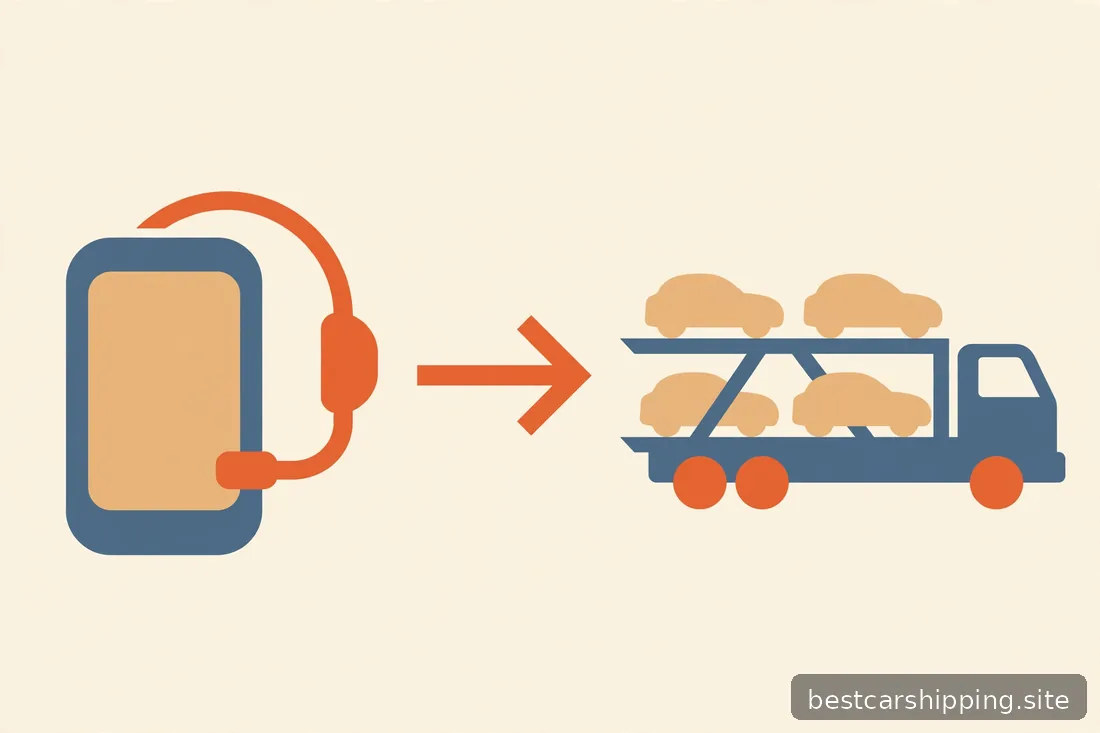
Think of it like booking a flight. The carrier is the airline — it owns the planes and flies them. The broker is the travel agent — it doesn’t own a single plane, but it knows every airline’s schedule and finds you a seat. When you hand your car to a broker-booked shipment, a real carrier with a real truck still shows up. The broker is the middleman who made the match — and who you call when something goes sideways.
What a carrier does
A carrier is a trucking company (or an independent owner-operator) that owns or leases car-hauling trailers and employs the drivers. The carrier:
- Physically loads, transports, and unloads your car.
- Holds the cargo insurance that covers your vehicle in transit. If your car is damaged, the carrier’s policy is what pays.
- Performs the pickup and delivery inspections and signs the Bill of Lading with you.
- Decides the route and schedule — your car rides along with several others, so timing follows the truck’s route, not just your calendar.
Some carriers are large fleets running the same corridors daily. Many are small operations — a few trucks, or a single owner-operator. Size alone doesn’t determine quality; a two-truck outfit that runs your lane every week can outperform a national fleet on that route.
One practical reality: most carriers don’t deal directly with individual customers. They get their loads from brokers through industry load boards — online marketplaces where brokers post shipments and carriers bid on or accept them. If you’ve ever wondered why the same company name appears on the truck but not on your contract, this is why.
What a broker does
A broker is a logistics company that arranges vehicle transportation without owning trucks. The broker:
- Takes your order and your requirements — route, dates, vehicle details, transport type.
- Posts your shipment to carrier load boards and finds a carrier with room on your route.
- Quotes you a price based on what they believe carriers will accept for your lane — plus their fee.
- Coordinates communication — dispatch details, pickup windows, driver contact info.
- Handles problems — re-dispatching if a carrier cancels, mediating disputes.
The broker’s fee (their margin between what you pay and what the carrier gets) is how they stay in business. There’s nothing shady about the margin itself — it’s the service you’re buying: access to thousands of trucks you’d never find on your own, and someone to call when the truck breaks down.
As Move.org’s guide to car shipping pricing explains it: brokers “specialize in customer service. They work with consumers like you to understand your needs, then post your requirements to a job board that can only be accessed by approved carriers. Interested carriers bid on your job.”
How FMCSA licensing works
Both brokers and carriers are regulated by the Federal Motor Carrier Safety Administration (FMCSA), and both need federal authority to operate — just different kinds. This is where the MC and USDOT numbers come in, and the distinction is worth understanding because it’s your main verification tool.
- A USDOT number is an identity. It’s the unique identifier FMCSA assigns to a company operating commercial vehicles, used to track its safety record — inspections, crashes, audits. As one 2026 explainer on MC vs USDOT numbers puts it: the USDOT number answers “who are you?”
- An MC number is operating authority — a permission. It grants the legal right to transport regulated freight for hire across state lines, or to broker it. The same explainer’s summary: the MC number answers “are you allowed to be paid to move this?”
- Carriers operating interstate need both: a USDOT number (identity) and carrier operating authority (MC number).
- Brokers need broker operating authority (their own MC number) — but since they own no trucks, they have nothing to mark with a USDOT number on a power unit.
One more 2026-relevant note: you may see claims that FMCSA eliminated MC numbers. As of the latest verified reporting, that retirement was proposed but then pulled from the agency’s Phase II rollout — FMCSA stated in the Federal Register (April 2026) that eliminating MC numbers is deferred, not implemented. MC numbers are still the authority identifier in use.
What this means for you: before booking, ask the company for its MC number (and USDOT number if it’s a carrier), then look it up on the FMCSA’s SAFER company snapshot lookup to confirm the authority is active and insurance is on file. A company that won’t give you these numbers is a company you shouldn’t book with.
Why the market is broker-dominated
If most online car shipping companies are brokers, it’s because the economics favor it. Running trucks is capital-intensive — a single car-hauling rig costs hundreds of thousands of dollars, plus fuel, maintenance, insurance, and driver wages. Running a brokerage is a phones-and-software business.
The result: thousands of brokers compete for your booking online, while the actual trucks are a smaller pool of carriers and owner-operators. This isn’t inherently bad — brokers create the competition that keeps prices in check, and a good broker gives you access to far more trucks than you could ever find yourself. Easy Storage Search’s 2026 guide notes the same reality: “Most online quotes come from brokers, who find an independent carrier to move your car, rather than from the carrier itself. A good broker gives you access to thousands of trucks.”
The industry’s real problem isn’t brokers — it’s dishonest brokers: the ones who quote unrealistically low to win your deposit, then can’t find a carrier at that price and come back asking for more. That’s a business-practice problem, not a business-model problem. Our guide to car shipping scams and red flags covers how to spot it.

Pros and cons of each
Booking with a broker — the case for:
- Access to thousands of carriers; better odds of finding a truck on thin routes or tight dates.
- One point of contact for booking, updates, and problem-solving.
- Competition among carriers on the load board can lower your price.
- Easier to book — instant online quotes, national coverage.
The case against:
- You don’t control which carrier gets your car (though good brokers will tell you who it is once dispatched — ask).
- An extra margin sits between you and the carrier’s actual price.
- A bad broker can leave you waiting if their quote was too low to attract a truck.
Booking directly with a carrier — the case for:
- No middleman margin; you pay the truck’s price.
- You know exactly who’s handling your car from day one.
- Direct communication with the driver.
The case against:
- Harder to find — most carriers don’t market to individual customers.
- Limited to their routes and schedule; if they don’t run your lane, you’re stuck.
- If their truck breaks down, there’s no broker to re-dispatch you — your shipment waits.
- You do all the vetting yourself.
For most people, most of the time, a reputable broker is the practical choice — especially on uncommon routes. The key word is reputable. A broker’s value is entirely in their honesty about pricing and their diligence in dispatching.
How to verify any company in 5 minutes
Whether broker or carrier, run this check before you pay anything:
- Get the numbers. Ask for the company’s MC number (every legitimate broker and carrier has one) and USDOT number (carriers).
- Look them up on FMCSA’s SAFER system. Confirm the operating authority is listed as active and that insurance is on file. Inactive authority or missing insurance filings are hard stops — walk away.
- Match the name. The legal name on the FMCSA record should match the company you’re talking to. Shell games with names are a classic red-flag pattern.
- Check complaint history. The FMCSA lookup shows safety and complaint data. Supplement with recent Google and BBB reviews, focusing on how the company handles delays and damage claims — not the star rating alone.
- Confirm broker vs carrier in writing. Ask directly: “Are you a broker or a carrier?” Get the answer in the contract. If they dodge the question, that’s your answer.
This five-minute check filters out the overwhelming majority of problem companies. It won’t guarantee a perfect shipment — trucks break down and weather happens — but it guarantees you’re dealing with a real, licensed business.
Frequently asked questions
Is it better to use a broker or a carrier?
Neither is universally better. Use a broker when you want convenience, broad carrier access, and help if problems arise — especially on uncommon routes. Use a carrier directly when you find one that runs your exact lane and you want the middleman margin out of the price. Either way, verify FMCSA authority first.
How do brokers make money?
On the spread: the difference between what you pay and what the carrier accepts. Reputable brokers earn it by finding you a good truck at a fair price and managing the shipment. The fee is typically bundled into your quote rather than itemized — ask what it is if you want to know.
Can a company be both a broker and a carrier?
Yes — some companies hold both broker and carrier authority. They may move your car on their own truck or broker it to another carrier depending on the route. Ask which applies to your shipment.
Who is liable if my car is damaged?
The carrier. Cargo liability sits with the company that physically transported the vehicle — that’s why verifying the carrier’s insurance (not just the broker’s) matters. A good broker will share the assigned carrier’s name and insurance details once dispatched; if yours won’t, ask why.
Why did my broker raise the price after I booked?
Usually because the original quote was too low to attract a carrier on the load board, and the broker needs a higher price to get your car dispatched. This is the classic low-ball pattern — one reason to be wary of quotes far below the market range. Our quotes guide explains binding vs non-binding quotes and how to protect yourself.
Bottom line: brokers aren’t the enemy and carriers aren’t automatically saints. The label matters far less than the license, the honesty of the quote, and whether the company answers straight questions with straight answers. Verify the authority, compare a few quotes, and you’ll be dealing with the good side of this industry.